






Jeffrey Meltzer: Can’t get away from a toxic relationship? US therapist Jeffrey Meltzer shares 5 ways you can
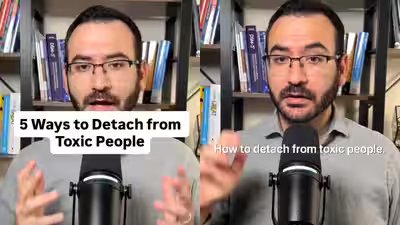
Walking away from a relationship that you know isn’t healthy can be much harder than recognising what’s wrong with it. Feelings, shared memories and the hope that things might eventually change can all make it difficult to let go.Florida-based therapist Jeffrey Meltzer, a Licensed Mental Health Counselor, recently addressed this struggle in an Instagram post shared on September 10. He outlined five things people can do when they’re trying to create distance from a relationship that’s having an unhealthy impact on their life.Here’s what he suggests.
1. First, recognise that the relationship is toxic
It may sound obvious, but Meltzer points out that getting used to someone’s behaviour can sometimes make unhealthy patterns seem normal.“So, pay attention to the patterns,” he stated. “Do they pressure you to do things that go against your values? Do they repeatedly cross boundaries that you have clearly communicated? Do they struggle to take accountability and constantly make other people responsible for the problems they create?”Recognising these patterns can help a person look at the relationship more clearly and decide how much access the other person should have to their life.
2. Start limiting your interactions
Creating distance doesn’t necessarily mean cutting someone off completely. In some situations, no contact may not be practical or even necessary.Instead, Meltzer suggests being more deliberate about how much time and attention you give the person once you realise their presence is affecting you negatively.“That being said, you do not have to become cold or give them the silent treatment. You can simply stop saying yes to unnecessary interactions and create more space between yourself and the relationship,” noted Jeffrey.Small changes in how often you respond, meet or engage can gradually create some much-needed space.
3. Be prepared to feel uncomfortable
Setting boundaries can feel strange, particularly when the other person is accustomed to having easy access to you. And their reaction may make the process even harder.“Creating distance from someone who is used to having access to you can feel incredibly uncomfortable. They may become frustrated when you say no. They may push against your boundaries. They may try to make you feel guilty for changing the dynamic of the relationship,” Jeffrey said.He suggests learning to sit with some of that discomfort instead of immediately trying to make everything feel normal again.Feeling guilty or uncomfortable doesn’t necessarily mean you’ve made the wrong decision. Sometimes, it can simply mean you’re changing a pattern that you’ve been used to for a long time.
4. Remember that someone can have good qualities and still be unhealthy for you
This is often one of the hardest parts of letting go. A difficult relationship doesn’t mean every memory was bad or that the person never had qualities you loved.“You may have loved and cared for this person. You may have even shared beautiful memories with them. And none of that has to disappear for you to acknowledge that the relationship is still unhealthy,” Jeffrey stated.He also pointed out how easy it can be to focus on someone’s better side when you’re struggling to detach.“We remember the best parts of someone and start using those memories to excuse patterns that continue hurting us. But keep in mind that you can appreciate what was good without using it as a reason to keep accepting what is hurting you.”Accepting that both things can be true may make it easier to see the relationship without idealising either the good or the bad.
5. Stop waiting for them to change
Sometimes, closure doesn’t come in the form people hope for. The apology may never arrive. The other person may never fully understand what they did or become the person you hoped they would be.“They may never fully understand how they affected you, and they may never become the person you kept hoping that they would be,” Jeffrey stated.
- “But you do not need their understanding to choose yourself,” he added. “Sometimes detaching means accepting that you can deeply care about someone and still recognise that having less of them in your life may be what you need to protect your peace.”