






Jewish proverb of the day: “A woman of sixty, like a girl of six, runs at the sound of…” |
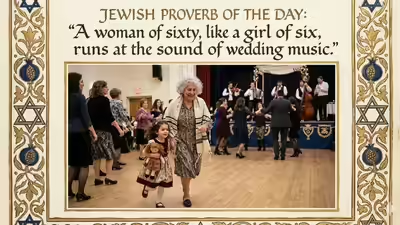
There is an interesting thing about getting older. People change in countless ways. Their routines change. Their priorities change. Even their opinions about life can shift dramatically over the years.Yet certain reactions remain surprisingly untouched.A familiar song can still bring back memories. The smell of a favourite meal can still brighten a day. And for many people, the sound of celebration can still spark excitement no matter how many birthdays they have celebrated.That seems to be the idea behind this old Jewish proverb:“A woman of sixty, like a girl of six, runs at the sound of wedding music.”It is a cheerful saying, and perhaps that is part of its charm. Rather than focusing on age as a limitation, it presents age as something that exists alongside enthusiasm, curiosity, and joy. The years may pass, but some feelings stay remarkably similar.
Jewish proverb of the day
“A woman of sixty, like a girl of six, runs at the sound of wedding music.”
Wedding celebrations have always attracted people
Long before modern entertainment existed, weddings were often among the most anticipated events in a community.They brought together relatives who had not seen one another for months. Friends gathered. Stories were exchanged. Meals were shared. Music filled the air. For a short while, ordinary concerns stepped aside and people focused on celebration.In villages and towns, the sound of wedding music could travel quite a distance. People often knew a celebration was taking place before they ever saw it.One can imagine children becoming excited at the first notes drifting through the air. The proverb suggests that older adults were not much different. The music itself became an invitation.Not necessarily to dance. Not necessarily to participate directly. But to be near the happiness, the energy, and the sense that something important was happening.
The saying is really about human nature
Taken literally, the proverb talks about a woman of sixty and a girl of six.Its real subject is broader than that.The saying points towards a simple observation: people rarely lose their attraction to joyful occasions. The form may change with age, but the feeling often remains.A young child may run towards a wedding because it looks exciting.An older person may move towards it because it reminds them of family, tradition, memories, or simply the pleasure of seeing others happy.The reasons differ. The pull remains. That is what makes the comparison memorable. It connects two very different stages of life through a shared emotional response.
Age changes many things, but not everything
People often talk about ageing as though it transforms a person completely.Real life tends to be more complicated.Someone who enjoyed music at twenty may still enjoy it at seventy. Someone who loved celebrations in youth may continue looking forward to them decades later. A person may become wiser, calmer, and more experienced without losing the ability to feel excitement.Many families have seen this for themselves. There is often a grandparent, aunt, or elderly neighbour who becomes just as interested in wedding preparations as the younger members of the family. They ask questions, discuss details, remember earlier weddings, and eagerly await the event.The proverb seems to recognise that familiar scene. Not with criticism. With affection.
Happiness has a way of drawing people together
Wedding music serves an important role in the proverb.It is not just background sound. It represents celebration itself.Music announces that something joyful is happening. It creates atmosphere before a single word is spoken. Even people passing by can sense the mood.That is probably why wedding music appears in so many traditions around the world. Different cultures use different instruments and melodies, but the purpose remains similar. The music tells people that this is a moment worth noticing.The proverb builds its image around that idea. The woman is not running towards noise. She is running towards happiness.And happiness, perhaps, is one of the few things that remains attractive at every age.
Why the proverb continues to feel relevant
Many old sayings survive because they capture experiences that people continue to recognise. This one does exactly that.Most readers know someone who becomes animated whenever there is a wedding, a festival, or a family gathering approaching. The excitement may be expressed differently than it was in childhood, but it is still there.That recognition gives the proverb its staying power.It reminds people that ageing does not automatically erase enthusiasm. The years may add responsibilities, experience, and perspective, but they do not necessarily remove the desire to share in life’s happier moments.In some cases, they deepen it.
Final takeaway from the proverb
“A woman of sixty, like a girl of six, runs at the sound of wedding music” is a warm and light-hearted proverb about the enduring appeal of celebration. Beneath its humour lies an observation that feels timeless: people may grow older, but they do not stop responding to joy.The saying suggests that excitement, curiosity, and happiness are not qualities reserved for youth. They can remain present throughout life, appearing whenever music plays, families gather, and a happy occasion begins.Perhaps that is why the proverb continues to be remembered. It offers a gentle reminder that while age changes many things, it does not change everything. Some parts of the human spirit continue to move towards happiness, whether a person is six years old or sixty.