






Just a pinch of black pepper can change what your body gets from food: Here’s the science
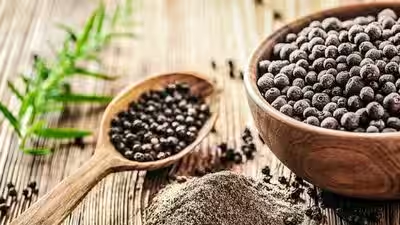
Black pepper contains a compound with a surprising effect: it significantly increases the amount of some nutrients that the body actually absorbs. The compound in question, called piperine, is found in the pepper’s seeds and to a lesser extent in its fruit. The U.S. National Institutes of Health (NIH) has compiled research on piperine’s potential as a bioavailability enhancer, meaning that it helps the body better absorb certain beneficial substances.However, it is important to note that this benefit is not universal. For some of the nutrients, the mechanisms have been proven, but for others, the evidence is far more scant.
The black pepper-turmeric connection
The most established connection is with curcumin, a compound present in turmeric.According to the U.S. National Center for Complementary and Integrative Health (NCCIH), the most reliable way to improve curcumin’s bioavailability is to take it with piperine. This is precisely what many curcumin dietary supplements do, the report highlights that these products often contain either piperine or other ingredients that help the body absorb curcumin, or both.The reason why this connection is important is that, despite curcumin’s reputation as a powerful anti-inflammatory agent, its bioavailability is limited. Piperine is a potential solution to this problem. A PubMed-indexed clinical trial demonstrated that the addition of black pepper enhanced both the absorption and the elimination half-life of curcumin beyond what curcumin alone could achieve. The researchers concluded that piperine had a significant effect on curcumin’s bioavailability, though they emphasized the need for further research.This demonstrates why the combination of turmeric and black pepper is so popular but it is important that the bioavailability-enhancing properties of that combination are far from universal.
Science explains why black pepper can make certain nutrients easier to absorb
Although the connection between black pepper and curcumin is the most well-known, it is only one part of black pepper’s potential effect on the body. Piperine appears to impact the way the body breaks down and processes compounds. Some research has demonstrated that it inhibits certain enzymes and carriers responsible for breaking down compounds after they have been ingested. In particular, it impacts the CYP3A4 enzyme system and the P-glycoprotein transporter, both of which are involved in eliminating various substances from the body.The overall effect of this inhibition depends on the substance in question. For some compounds that can significantly increase bioavailability, which is why piperine is sometimes referred to as a bioenhancer. However, these effects only occur at high concentrations of piperine.
Should you add pepper to all your meals to boost your nutrient intake?
Not necessarily. For the majority of the population, black pepper is typically used as a means to enhance the flavor of food. Although the bioavailability of some nutrients can be boosted by adding more black pepper to your diet, it is impossible to say that a pinch of pepper would significantly increase the nutritional value of your meal. Moreover, studies warn that piperine’s effects on the body’s metabolism can interfere with the way certain medications work.According to the reports, there is a risk of mild to severe interactions between some medications and herbs or dietary supplements, and those who take prescription drugs should consult their physician before using them alongside other dietary supplements. This implies that even though piperine’s effects on the body are scientifically interesting, they are not entirely benign. As such, one should carefully consider the costs and benefits before attempting to use piperine’s properties for personal purposes.Also read:Woman loses 70 kg to donate kidney to husband, then gives it to a stranger in a paired exchange that saves two livesNoida man finds cab driver too tired to drive to Lucknow, takes over wheel himself: ‘No point getting angry’
A touch of black pepper can indeed go a long way
It should be fairly evident from the information above that black pepper, when added to food, can have a profound effect on the way the body processes some nutrients. However, the evidence behind this assumption is far from conclusive. The strongest support for the theory comes from black pepper’s ability to impact curcumin’s bioavailability, but that only applies to that particular compound.It is entirely possible that the same diet and medication adjustments would interfere with the way your body processes the nutrients in your daily meals. In other words, although black pepper can improve the bioavailability of some nutrients, it is difficult to recommend adding extra black pepper to all meals for the sake of better health.Disclaimer: This article is for general information only and does not replace professional medical advice.