





Meet Daniel Janzen: The ecologist who turned 169,000 hectares of Costa Rica into a giant forest filled with biodiversity | World News
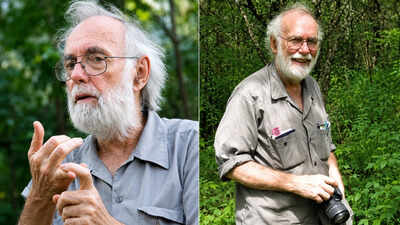
Daniel H. Janzen is a biologist whose career has blurred the traditional boundaries between field ecology, evolutionary science and conservation. For decades, his work has centred on tropical ecosystems, particularly the forests of Costa Rica, where he studied the intricate relationships between plants, insects and other organisms. His research eventually developed into something much larger than documenting species. Alongside biologist Winnie Hallwachs, Janzen helped shape the Área de Conservación Guanacaste (ACG), a vast conservation landscape in north-western Costa Rica that connects forests, volcanic ecosystems and marine environments. His work has also explored how conservation can function alongside local communities rather than treating protected areas as places completely separated from society. The University of Pennsylvania identifies Janzen as a leading figure in conservation biology, while his research has produced hundreds of scientific publications and influenced modern approaches to tropical biodiversity. His career demonstrates how understanding an ecosystem can become the first step towards protecting it for generations.
How Daniel Janzen became fascinated by tropical ecosystems and field biology
Janzen’s relationship with tropical biology began when he was young. According to the University of Pennsylvania and a biographical account published by the National Academy of Sciences, his interest in the tropics developed during a butterfly-collecting trip to Mexico when he was 14. He later studied biology at the University of Minnesota before earning his PhD from the University of California, Berkeley. His research became particularly focused on the relationships between tropical plants and animals. Insects, especially caterpillars and their interactions with host plants and parasites, became an important part of his scientific work. Since the late 1970s, Janzen and Hallwachs have carried out extensive field observations in Costa Rica’s Área de Conservación Guanacaste. Their long-term work has helped document the complexity of tropical ecosystems rather than treating species as isolated components.
Why Costa Rica became central to Daniel Janzen’s conservation work
Janzen’s role changed significantly during the 1980s, when scientific research began evolving into a much broader conservation effort. After being asked to examine environmental damage in Costa Rica, he became increasingly concerned that simply creating protected areas would not necessarily guarantee their survival. His focus shifted towards finding ways for conservation areas to function as part of the surrounding society. This philosophy became closely associated with the Área de Conservación Guanacaste. Janzen and Hallwachs helped develop the landscape into a large-scale conservation experiment involving restoration, biodiversity research, local employment and partnerships. A 2020 paper by Janzen and Hallwachs describes the ACG as a government-NGO conservation entity spanning roughly 169,000 hectares and incorporating ecosystems extending from the Pacific Ocean through dry forests and volcanic landscapes towards wetter forests. The approach challenged the idea that successful conservation simply means keeping people outside protected areas. Instead, Janzen argued for integrating biodiversity protection with the communities and institutions surrounding it.
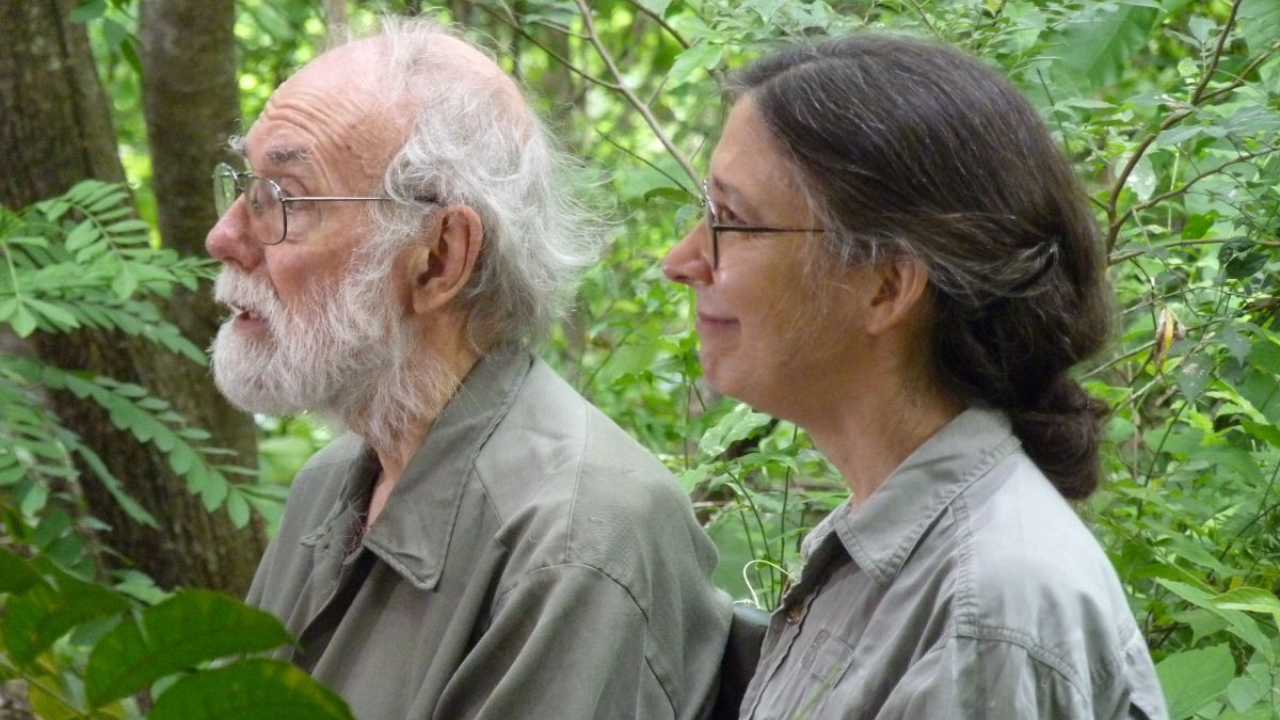
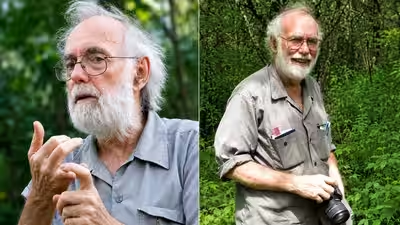
Winnie Hallwachs and Dan Janzen (Image: By Shayla White)
From cataloguing species to building a long-term biodiversity legacy
One of Janzen’s most influential contributions has been his emphasis on understanding biodiversity at an enormous scale. The ACG has become both a conservation landscape and a long-term scientific research site, where species can be documented while their relationships with ecosystems are studied over decades. Janzen’s work has also contributed to the development of DNA barcoding as a tool for identifying species. The University of Costa Rica notes that he helped promote the use of genetic “barcodes” to recognise species through molecular techniques, while his broader scientific output includes more than 500 publications. The scale of the ACG reflects the ambition behind this approach. Janzen and Hallwachs have described the area as a long-term effort to restore and conserve a connected tropical landscape while integrating it into Costa Rican society. For Janzen, therefore, conservation is not simply about preserving a snapshot of nature. It is about understanding how an ecosystem works, documenting its biological wealth and creating the social and scientific structures needed to keep that diversity alive far into the future.