




Meet M Thangaraj, the Tenkasi teacher who turned a village classroom into a mini government; students run education, health and agriculture ministries, while his methods have reached 50+ teachers
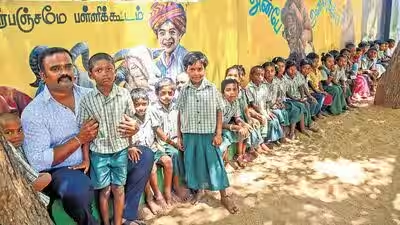
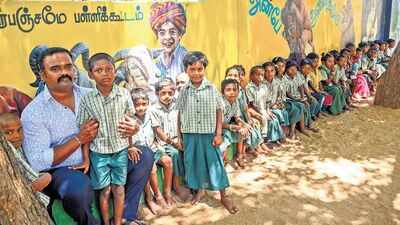
A lesson about the stars can become much more than a science class when a teacher knows how to bring learning to life. At Panchayat Union Primary School in Puliyampatti, M Thangaraj uses a projector to take children beyond their textbooks, introducing them to distant constellations and the Milky Way. For his students, the experience offers a glimpse of a world far bigger than the one they see around them every day.But the space lesson is only one part of Thangaraj’s approach to education. With more than two decades of teaching experience, he has worked to make his school a place where children participate actively, take responsibility and feel encouraged to pursue their ambitions. His efforts earned him the National Teachers’ Award in September 2026. From creating student leadership roles to mobilising community support for school facilities, Thangaraj’s work extends beyond teaching lessons. His larger focus is on helping children gain the confidence, skills and opportunities to continue their education.
Giving children a voice in their own classroom
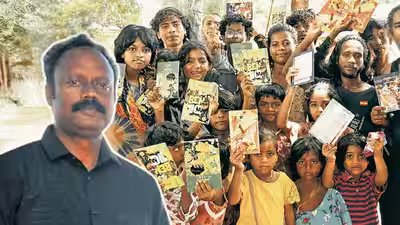
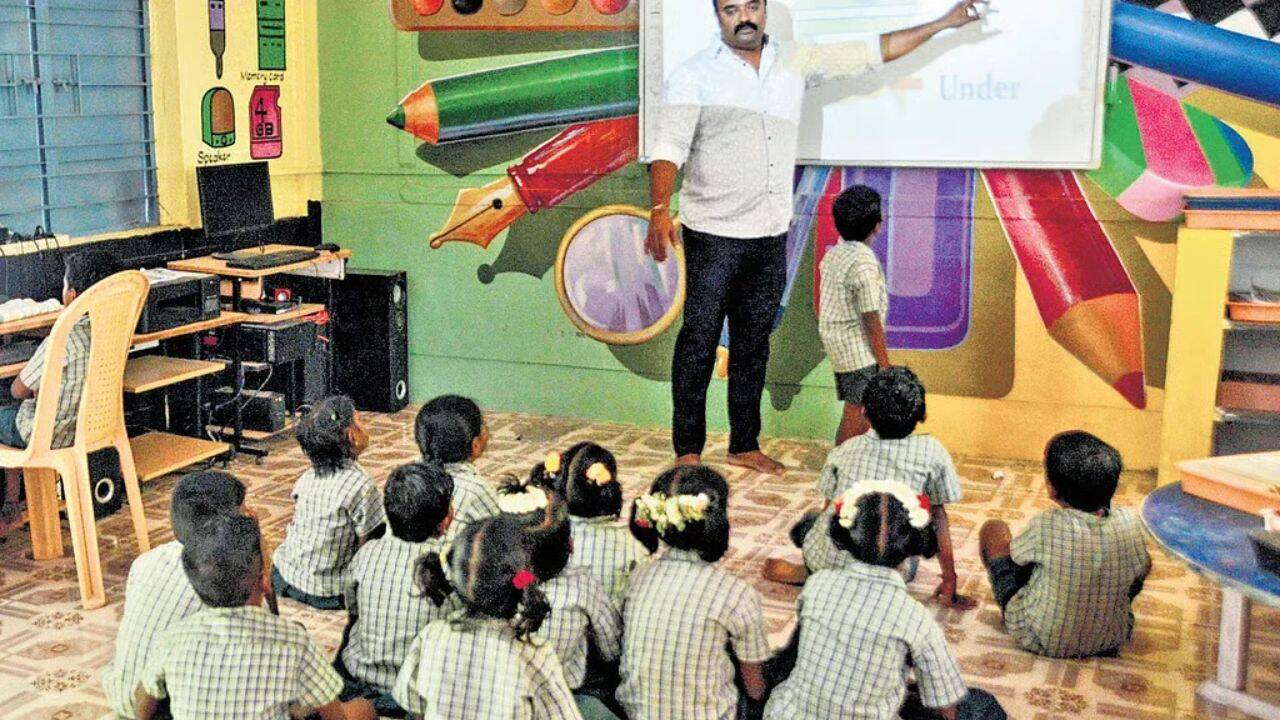
Instead of making students passive listeners, Thangaraj gives them responsibilities that bring them into the everyday functioning of the school. Children take on roles as student-ministers for education, health, agriculture and food, learning to contribute to their shared environment. The agriculture minister helps look after crops such as leafy greens in the school garden. The education minister keeps track of classmates’ learning progress, while the health minister encourages cleanliness and hygiene. The food minister promotes healthy eating habits and reminds students not to waste food during lunch.These responsibilities give children opportunities to practise teamwork, accountability and leadership from an early age. Thangaraj also combines digital tools with activities that encourage children to participate rather than simply memorise information. His classroom has a smart television, a projector and digital learning materials. Students can scan QR codes displayed on the smart TV to access educational content.“Children are not made to simply memorise lessons. Storytelling, games, role play, flashcards, and activity-based learning are part of my teaching. One of the methods is allowing students to scan QR codes displayed on the smart TV and access learning materials.” Learning also reaches beyond conventional subjects. With support from college students, Thangaraj has organised a Coin Expo and a Robotic Expo. Children also participate in yoga, chess, carrom, Oyilattam and kabaddi, giving them opportunities to explore different interests and abilities.
Turning the village into a learning space
Thangaraj’s efforts do not end at the school gate. He has involved parents, former students, volunteers, local residents and organisations in improving the learning environment and giving children access to better resources. Through community support and funds raised at an education festival, he mobilised educational resources worth Rs 2 lakh. Volunteers helped provide a smart digital classroom and uniforms for 108 students. Supporters also contributed to roof and flooring renovations worth Rs 2 lakh and donated furniture.Environmental awareness is another part of the school’s activities. Students have prepared and sown 1,330 seed balls in agricultural fields around the village. Saplings have also been planted on the school campus with the support of an environmental organisation. Through these activities, children get opportunities to engage with their surroundings and take part in environmental efforts.Thangaraj has also shared his classroom practices with other educators. He has trained more than 50 teachers from the Kuruvikulam, Vasudevanallur, Kadayanallur, Keezhapavur and Shengottai unions. He has served as a district resource person for school management committee meetings and the Illam Thedi Kalvi initiative.
Addressing the barriers that keep children from learning
Engaging lessons are only one part of a supportive school environment. Access to books, suitable facilities and basic amenities also matters, and Thangaraj has worked to address these needs. Through Samagra Shiksha funds, he helped initiate libraries worth Rs 20,000 each in nine government schools. He also brought the absence of proper toilets for girl students to the attention of the district collector. The issue resulted in the construction of toilets worth Rs 5 lakh.His work has also taken him beyond the classroom. He has spoken about child protection and girls’ education on Tirunelveli Radio and presented his teaching methods at Manonmaniam Sundaranar University. These efforts reflect the different needs that shape a child’s education, from engaging teaching methods to facilities that help students attend school in a safe and supportive setting.
A teacher’s influence that lasts beyond school
For Thangaraj, the value of his work is also visible in what happens after students leave his classroom. Some of his former pupils are studying at Tirunelveli Government Engineering College, while others have pursued degrees and paramedical courses. Many are working towards becoming first-generation graduates in their families.Former student P Lingakani credits him with helping her make important decisions about her future. She recalled that he recognised her abilities and guided her in choosing a stream after Class 10. When her parents wanted her to marry after Class 12, Thangaraj persuaded them to let her attend college in Madurai, where she completed her degree. He later encouraged her to join an IAS coaching centre in Chennai.“Thangaraj sir identified my skills and asked me to choose the right stream in plus one. When I completed plus two, my parents wanted to get me married. However, sir convinced them to admit me to a college in Madurai, where I completed my degree. He motivated me to join an IAS coaching centre in Chennai. I am preparing for the civil services examination.”Lingakani’s experience shows how guidance from a teacher can influence decisions well beyond academic lessons. For a student navigating choices about higher education and a future career, that encouragement can help keep new possibilities open. Thangaraj’s work brings together classroom innovation, community participation and individual mentorship. The projector that introduces children to distant galaxies is one way of widening their horizons. Helping them stay in education, develop their abilities and imagine futures they may not have considered is another. His achievement lies in making both part of the same learning journey.