





Mimoh aka Mahaakshay Chakraborty: ‘If my father Mithun Chakraborty could survive his hell, what excuse do I have to quit?’ | Exclusive |
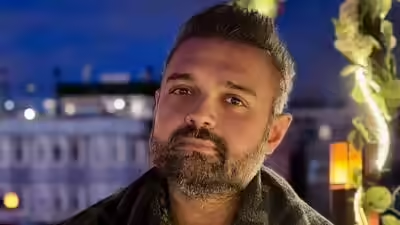
For Mahaakshay Chakraborty, better known as Mimoh, success today isn’t measured by box office numbers, industry validation, or comparisons with the towering legacy of his father, veteran actor Mithun Chakraborty. Instead, it is defined by peace, gratitude, and the ability to remain grounded through life’s many highs and lows.In an exclusive conversation with ETimes, Mimoh opens up about the invaluable lessons he learned from watching his father’s struggles, why he no longer seeks external validation, and how embracing uncertainty has transformed his outlook on life. He also speaks about his marriage to actor Madalsa Sharma, the importance of compartmentalizing different aspects of life, his willingness to take on challenging roles across languages and genres, and the possibility of sharing screen space with his father and brother in the future.
What was little Mimoh like in school?
Little Mimoh was just like every other kid in school. I remember birthdays being the best days because we could wear civilian clothes instead of uniforms. Everyone’s attention would be on you, there would be chocolates, birthday parties, and you would feel like a superstar for a day. Apart from that, school was like any other school. I had my friends and, like most kids, I loved PT class the most because we got to play sports during school hours. It felt like a fantasy land where we didn’t have to study.
Were you a studious child or a mischievous one?
Not mischievous at all. I was good in studies and was particularly fond of physics while growing up. I was fascinated by space and astronomy, and I still am. Even today, I take online courses from universities around the world on subjects like space, astronomy, and history. I was neither too quiet nor too naughty—I was somewhere in the middle. My only aim was to avoid getting punished by teachers.
Were you a teacher’s favourite?
Not really, although I always wanted to be. It was always a 50-50 situation. I wasn’t the most mischievous student, nor was I the quietest. I was one of the tallest students in school, so teachers always made me sit at the back. I used to complain that I couldn’t see the blackboard, and they thought I was making excuses to sit in front. Eventually, we discovered I actually needed glasses.
Being the son of Mithun Chakraborty and Yogeeta Bali , were you treated differently by classmates?
Yes, of course. Sometimes I would get those snobbish looks. If things didn’t go someone’s way, I would often become the target. But eventually, I got used to it. I realised it’s a part of life. People assumed there was special treatment because of who my parents were, even though that was never the case. My parents never wanted that. You can’t really change people’s perceptions.
And what about teachers?
Teachers were always fine. It was mostly the students who believed there was some sort of special treatment happening, which wasn’t true.
Did you ever get into trouble at school that reached your father?
No, never. As I said, I wasn’t someone who invited trouble. We were just regular kids. We were obsessed with wrestling—Hulk Hogan, Yokozuna, British Bulldog. Our lunch boxes, school bags, postcard collections—everything revolved around wrestling.
Did you discuss school life with your parents after coming home?
Not really. Dad was hardly around because he used to do six shifts a day. By the time I slept, he would come home, and before I woke up, he’d already left for work. Mom was always there, but I wasn’t the kind of kid who came home and discussed everything. My routine was simple—come back from school, change clothes, go downstairs and play cricket or dodgeball, attend tuition classes, spend time with cousins, eat dinner, and sleep.
Did you miss your father while growing up?
We were actually very scared of Dad. Whenever he came home, he had a unique way of ringing the bell twice very quickly. The moment we heard that, we’d all become statues. It wasn’t because he was strict; it was just his presence. He often had producers and directors visiting the house, so we knew it was time to be quiet.
Did you visit film sets as a child?
Occasionally. Not all the time because school came first. But film sets never felt unusual to us. We grew up knowing what lights, cameras and action looked like. It was second nature.
How different was college life from school life?
I hardly experienced college because I studied from home after a point. So, I didn’t really have the typical college experience.
When did you realise you wanted to become an actor and follow your father’s footsteps?
There wasn’t a specific calling. I was actually a huge fan of space and NASA. I wanted to become an astronomer. Then destiny had other plans. After Kaho Naa… Pyaar Hai released and Hrithik Roshan became an overnight star, many star kids started getting offers. I was also approached for a film, but I was only 16. Dad said I should complete my studies first and then decide. That planted the seed. I started training in acting, horse riding, dancing and other skills. Gradually, I got the acting bug.
Did growing up around stars and stardom attract you to films?
Not at all. I was a fan of many actors, but that wasn’t the reason. The desire came from within.
How did your parents react when you told them you wanted to join films?
In fact, they asked me whether I wanted to do it. I said, ‘Why not? Let’s give it a shot.’ They supported me completely. They were patient and always guided me. They made me understand that acting requires preparation—acting classes, horse riding, MMA, Indian classical dance. You never know which skill you’ll need someday.
What was going through your mind before the release of your debut film Jimmy?
I was extremely nervous. More than excited, I was nervous. You think you’re ready, but you’re never really ready. There was a lot of hype, and I kept wondering whether people would like me or not. Even today I get nervous before a release, but back then it was amplified a thousand times.
People compared you with Mithun Chakraborty from the very beginning. How did you deal with that?
That’s natural. Even Sachin Tendulkar’s son gets compared to his father. That’s how legacies work. Back then it was the same as it is today. It’s just a part of life.
When your debut film didn’t perform as expected, what was your first reaction?
My first thought was, ‘What do I do next?’ Would I get another opportunity? What did the universe have planned for me? Everything suddenly became uncertain. You create a reality in your head where everything goes according to plan, and when it doesn’t, you’re left wondering about the next chapter.
How did you cope with that difficult phase?
Family and friends were my biggest support system. But it was also about my own mindset. I accepted that this had happened and started thinking about how to move forward. It was a one-day-at-a-time process. Life is all about taking one step at a time.
You had once mentioned that Salman Khan helped you through that phase. How did that happen?
Salman Bhai has always been a great supporter. He loves my father a lot and is a wonderful human being. Whenever I needed advice or support, he was there. Not just him—many people in the industry were kind and supportive in their own ways. They understood because they had all experienced their own highs and lows.
What kind of impact did Salman Khan have on you?
He kept me grounded. He always reminded me not to let the highs and lows define me. One day you’re at your lowest, the next day you’re at your highest—that’s the nature of this profession. He was always there as moral support. I knew he was just one phone call away, and I owe him a lot for that.
Did he ever guide you professionally?
He’s an extremely busy man, so I never expected him to map out my career. But whenever I needed him, he was there to lift my spirits. There are certain conversations we had that I’d rather keep private, but he was always a guiding force in my life.
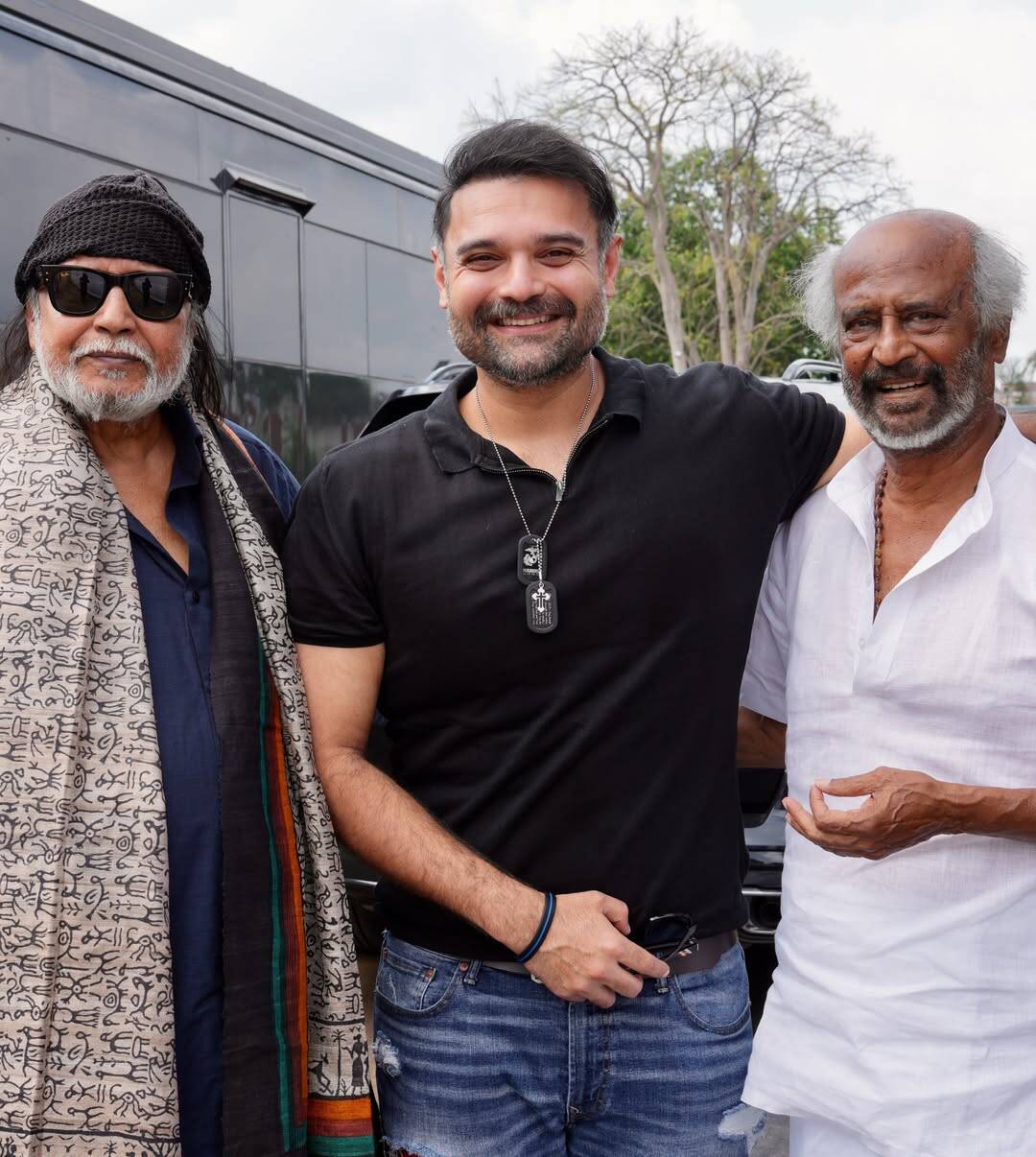
Your father, Mithun Chakraborty, went through immense hardships and failures before becoming a superstar. Did his journey inspire you?
Of course. His journey has been the most inspiring. If he could refuse to quit after going through his own hell, then how can I quit? His struggles were so extreme, so dark, so challenging. Whenever I heard his stories, I would think, “My God, nobody should have to go through that.” If he could overcome all those adversities and emerge victorious, then what excuse do I have? It was extremely motivating.
Did those stories also shape your childhood and later your career?
Absolutely. Especially when I started working, those stories became guiding lights for me. They were constant reminders that everyone goes through difficult phases. When I looked at what my father had endured and how he always got back up, it taught me resilience. If he could do it, then so should I.
Is there one particular story about your father’s struggles that has stayed with you?
Everything. I could write a book about his struggles. There wasn’t a single day when he wasn’t faced with challenges. I remember one story where someone told him that if he waited outside a producer’s office, the producer might notice him. He stood there from around 8 in the morning until 8 in the evening.At one point, he desperately needed to use the washroom, but he refused to leave because he feared that the producer might walk out at that exact moment and miss seeing him. Eventually, he asked another person standing there to alert him if the producer came out while he quickly ran to the washroom. Imagine that level of insecurity and desperation for an opportunity. When you hear stories like that, you realise how much we take for granted today.
Have you ever thought about documenting those stories in a book?
No, that’s entirely his decision. But what I mean is that there are so many stories about his struggles that people should know. Whether they are ever documented or not is for him to decide.
Have you discussed it with him?
No. He’s a very low-profile person and doesn’t enjoy talking about his struggles. Maybe one day, if he feels ready, he will share them himself.
After your debut film didn’t work, did the industry’s perception towards you change?
I want to say this very clearly. People often say the industry is harsh, but at the end of the day, it’s a business. It’s a place where people invest money. If you’re profitable, people will invest in you. If you’re not, they won’t. It’s as simple as that.Every business in the world operates on profits. Why should this industry be any different? I never took it personally. People invest their time and money where they believe there is a return. I’ve understood that, and that’s the philosophy I live by.
Did you ever feel people judged you before seeing your work?
I think we all go through that. Human beings have a tendency to judge others without knowing all the facts. That’s just how people are. I can’t change human nature. Today, I completely accept it.Everyone has an opinion, and everyone believes their opinion is correct. In our own stories, we are all heroes. I don’t take it personally anymore because I cannot change the world’s perception.
Was there ever a phase when you questioned whether acting was truly meant for you?
Never. Not even once. I am extremely passionate about acting. I love it. Everyone around me is creatively inclined, and creativity fuels me. It’s my motivation. So there was never any doubt about acting as a career.
You mentioned being very close to your mother. What role did she play during difficult phases in your life?
She was my strongest support system. More than guidance, she gave me comfort and reassurance. She always reminded me that everything would be okay. Whenever I saw obstacles ahead, she would tell me that eventually the road would clear. That emotional support was invaluable.
How do you separate your identity from the immense legacy of Mithun Chakraborty?
It’s not about separating. It’s about focusing on myself. If I keep thinking about that legacy, I’ll never be able to achieve anything because there is only one Mithun Chakraborty.I don’t want to compete with that legacy. That is his journey. My path is completely different. My focus is on overcoming my own limitations and becoming a better version of myself.
Was there a particular role or project that made you feel you were finally being seen as Mahaakshay and not just Mithun Chakraborty’s son?
No. Every role should challenge me as an actor. I don’t approach roles thinking, “This will change people’s perception of me.” That’s a mindset driven by insecurity and the need for validation.Today, I don’t seek validation in that way. If a role excites me, challenges me and makes me eager to wake up and go to work, that’s enough. I want acting to be a source of joy, not a place where I’m constantly looking for approval.
Unlike many star kids, you were rarely seen socialising within that circle. Was that a conscious choice?
Not at all. My circle has simply always been different. I have my own group of friends, and I’m happy within that circle.It wasn’t a deliberate decision. It just happened naturally. Even today, I’m open to friendships with anyone. I simply don’t force relationships.
Looking back at your journey, what has taught you the most about acting and surviving in the industry?
Every project teaches you something. Every film, every role, every experience helps you grow. Life is about ups and downs, giving and receiving, learning and evolving.I’m constantly changing as a person and as an actor. Growth and learning never stop. That’s the biggest lesson.
You still audition for roles. Why is that important to you?
Of course I do. I believe every actor should continue auditioning. It’s part of the profession.Doctors train in hospitals, and actors audition. It’s how you learn, grow and stay connected to your craft. Auditioning is not something to be ashamed of; it’s part of the process.
What kind of roles did you dream of doing when you entered the industry?
I’ve always been open to everything. Hero roles, villains, supporting parts—anything.What matters to me is whether the role challenges me. If the story excites me and pushes me as an actor, I’ll do it. I’m not someone who looks at budgets, banners or labels. I want roles that force me to grow.
So you’re open to playing a villain as well?
Absolutely. A thousand percent. And not just in Hindi films—I’m open to working in any language. If it’s challenging, I want to do it.That’s how you grow. If I keep doing the same thing repeatedly, where’s the excitement? Even if I fail, at least I can say I challenged myself and gave it my best.
What does success mean to you today?
Success means peace.It’s no longer about numbers or box-office collections. Success is seeing the people you love healthy and safe. It’s being surrounded by people who remind you who you are. It’s being at ease with yourself, not being insecure, not constantly seeking more, and being grateful.Success is simplicity. It’s having a calm mind and accepting that most things in life are beyond our control. Once you make peace with that, you’ve already succeeded.Haunted 3D was loved by audiences, and now the sequel has also performed well. How does that feel?I’m extremely grateful. The last three years have been very challenging for this film. There were times when we genuinely wondered whether it would ever see the light of day.Now that the film has released and found success, it’s a wonderful feeling. The entire team went through highs and lows to make it happen. The most beautiful part is that people are finally seeing the film. They’re watching it, liking it and loving it. That’s all that matters to us because our biggest dream was for the audience to experience it, and now they are.
Is the success of Haunted 2 the kind of validation you were always looking for?
As I’ve said, I don’t seek validation anymore. Validation comes from a place of lack, and I don’t feel that lack today. I find peace in what I do. Our goal was for people to see the film, and today they are seeing it. I can’t ask for anything more. I’m just grateful. Three years of our lives have finally come to fruition, and that alone makes me very happy.
How did you train yourself to reach this level of contentment? Most people struggle with that.
It’s about compartmentalization. I’m not just an actor—I’m a son, a brother, a husband, a friend, a hotelier, a collector. There are many things that make me who I am. When something requires my attention, I focus on it completely and then move on to the next thing.I enjoy simple things too—cleaning, arranging things, watching movies. I don’t carry one emotion or task into the next part of my day. That ability to compartmentalize has helped me immensely.
It sounds like that must also help in balancing your personal life and career.
Absolutely. I remember Novak Djokovic once saying that tennis is a part of his life, not his entire life. Imagine someone whose identity is so closely tied to tennis saying that.That really stayed with me. Acting is part of my life, but it isn’t my entire life. Meemo is made up of many things, not just acting. That’s how I compartmentalize everything.
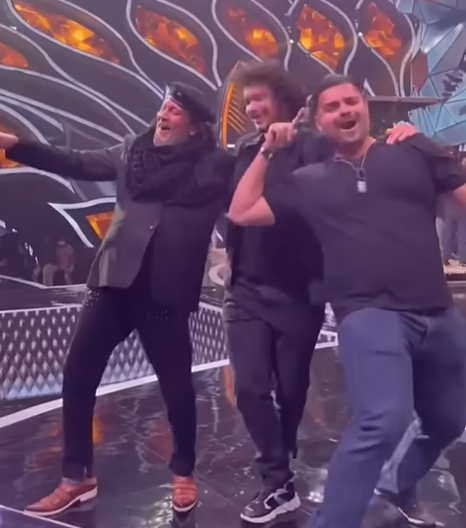
You mentioned being open to all kinds of roles. Would you like to work with your father Mithun Chakraborty and your brother Namashi Chakraborty in a film, like the Deols have done?
Of course. I would love to.
Have you ever seriously thought about it?
Yes, absolutely. If the opportunity arises, one thousand percent we would do it. But it has to be something worthwhile. It should be a good project, something that excites and challenges us, and something audiences would enjoy. If all those boxes are ticked, then why not?
Have you discussed the possibility within the family?
We’ve kept the conversation open, but it’s not something we dwell upon. If it has to happen, it will happen at the right time.
If you could change one thing about your journey so far, what would it be?
Nothing. Nothing at all.I’m in the best place of my life right now, and all the good and bad experiences were necessary for me to get here. I wouldn’t change a thing because every experience has shaped me.
So the journey itself has defined you?
Exactly. In fact, I don’t think I’ll ever be fully defined. I still want to keep learning. There are still things about myself that I’m discovering and understanding. Everything that has happened has brought me to where I am today, so I wouldn’t change anything.
You’ve said Mimoh is many things—a son, brother, husband. Tell me about being a husband.
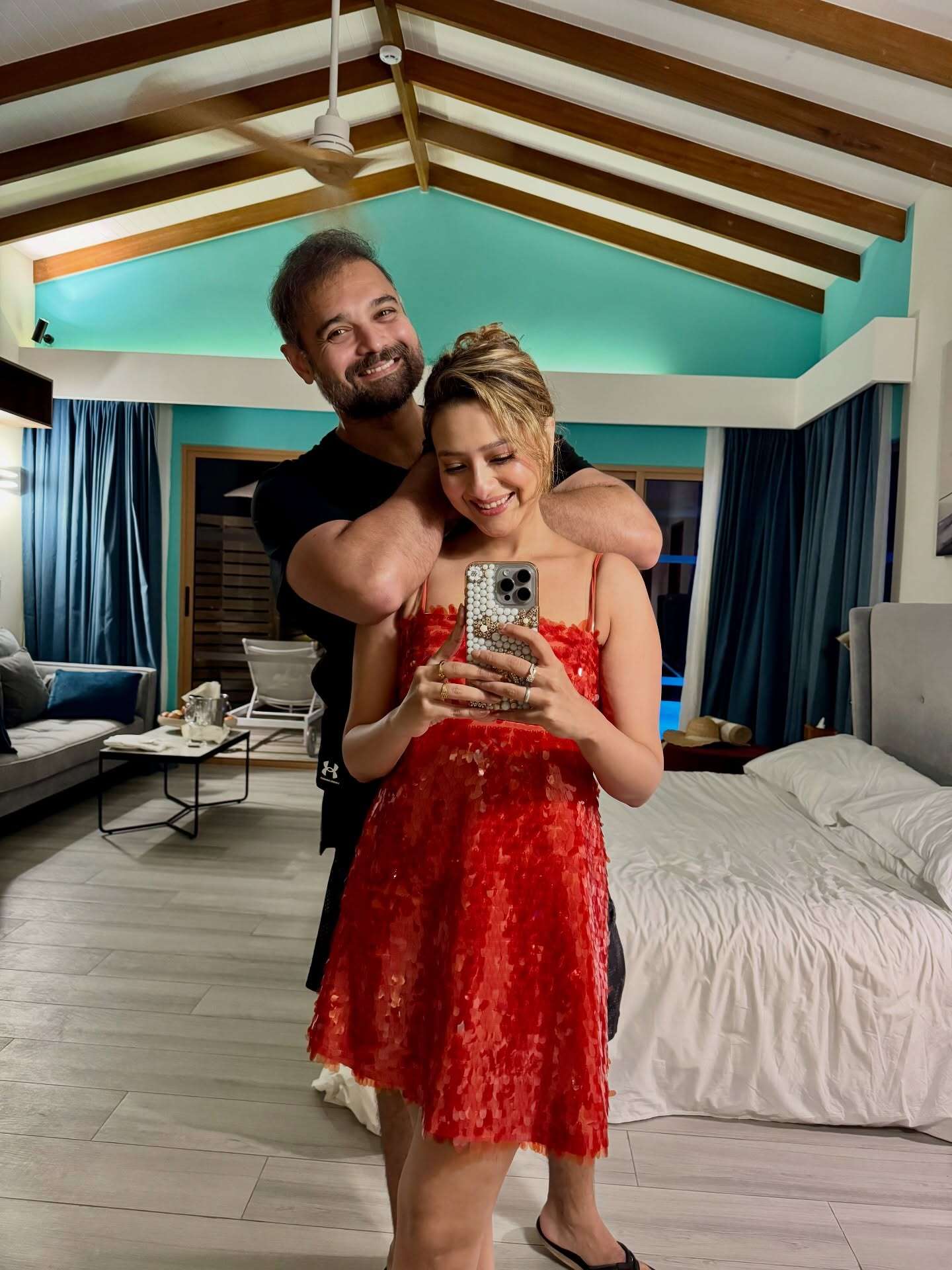
It’s the best feeling in the world. We are best friends.We understand each other and grow together every day. Marriage isn’t just about being married; it’s about understanding one another, being friends, and knowing what the other person wants. It’s an everyday process, and every day turns into something beautiful.
When did you first meet Madalsa?
I had worked with Sheila ji on a project. A couple of years later, I attended a music launch event. Sheila ji and Madalsa were leaving just as I was entering. That was the first time I exchanged glances with my future wife. I said hi, she said hi, and that was our first interaction.
Was that the moment you clicked?
No, that was just the first meeting. After that we stayed in touch, exchanged messages occasionally, and remained friends. Later, things naturally progressed.
Who proposed first?
Me. Of course, I made the first move.
Did you know then that she would be your wife?
Yes. There was a sense of knowing, a sense of understanding. I just knew she was the one.
What do you like most about her?
She’s my best friend. We’re very open with each other. We share everything—the good and the bad—and we truly understand each other. That understanding is all that’s really required.
Do you discuss career matters as well?
Everything. We discuss everything under the sun. Work, life goals, challenges—everything. We are open books to each other.
Madalsa is also a successful actor. How does that make you feel?
Extremely proud. It’s an honor.Even today, when people come up to her and praise her work, my chest expands a little. She achieved it through her own efforts. She made it happen, and that’s a beautiful thing.
Many people also look up to you because of the hardships you’ve faced and the way you’ve handled them with grace. What would you like to tell newcomers facing similar struggles?
If I had to summarize everything I’ve learned, it would be this: once we accept that 99% of things are beyond our control, we find peace.We want everything to happen according to our plans, but life doesn’t work that way. It’s uncertain. Everyone is chasing control, power, dominance, and the top spot. But that’s not always possible.Sometimes you don’t have to be the eagle in your story; sometimes you can be the owl. I like being the owl. I like being quiet because, for the first time in my life, I’m certain about myself—my capabilities, my responsibilities, and the roles I play.I don’t seek validation anymore. Validation is simply people approving of you. Why do we need that approval? Usually because we think we aren’t doing enough. But we are all doing our best. We’re all fighters in our own way.Today, people are complimenting my work in Haunted. Fans are happy with the film, and that’s wonderful. But those compliments don’t define me. They are an add-on. What defines me is whether I’m content with myself and whether I’m still the same person I was before.The biggest lesson is this: don’t react to things that are beyond your control, because most things in life will always be beyond your control.
People often compare their journeys with others. How do you view that?
That’s human nature. We’re all the heroes of our own stories. We all think our struggles are the most challenging and our lessons the most profound.But once you stop seeing yourself as the sole protagonist, everything becomes more relatable. Everybody has a story. Everybody wants to be heard. Everybody wants to feel important.There’s a saying I love: What other people think of me is none of my business.That’s their opinion, not mine. It has taken me a long time to reach that understanding, but I’m here now, and I’m very happy.
If you could sit down with your younger self today, what would you tell him?
Be patient. Very, very patient.That’s the process. Patience is one of the most important lessons I’ve learned. Life teaches you everything if you give it enough time.
Your sister Dishani Chakraborty is getting married. How do you feel about it?
I’m very happy, extremely grateful, and thankful that we get to experience this moment. When blessings come your way and you hear news that fills you with happiness, all you can do is fold your hands and say, “Thank you.” I think that’s the most beautiful prayer one can offer.Just be thankful for what you have. If there is happiness in your life, let yourself fully experience it. Happiness, success, and everything else come in phases. Life is like a mountain range—it goes up and down. So when you have a beautiful moment, cherish it. That’s exactly what we’re doing right now.
Finally, what are your upcoming projects?
Right now, I’m still soaking in the success of Haunted. I’ve been speaking to a lot of people, and many have approached me for web series and films.I’ll start reading scripts this week, and very soon you’ll hear about what comes next.