






Psychology says people who still read physical books instead of e-books have these 7 unique psychological strengths

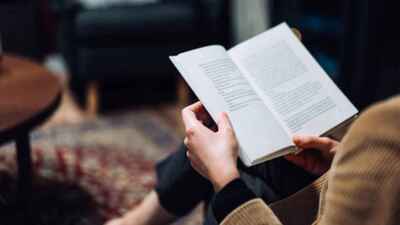
In the era of fast-track technology and superseding comfort, there are people who still like turning pages. Who visit bookstores to buy their next read and revel in the fragrance of a fresh book. Then some take it easy and download their book on their Kindles. While one might believe it is all about preferences and convenience, the way you read your books actually says a lot about your psychology. According to science, people who prefer pages over pixels have seven unique psychological strengths.
A preference for sustained concentration
There are no ‘dings’ of notifications and no messages to distract. Print readers often say that paper helps them focus. In a survey of 10,293 university students across 21 countries, participants generally preferred print for academic reading and associated it with concentration and retention. According to this study published in PLOS One, they preferred digital text when convenience mattered more. While reading coursework is not the same as reading novels for pleasure, choosing a less connected path functions like creating a boundary. For readers who already know they are distractible, that constraint may be part of the appeal. It suggests a willingness to arrange the environment around concentration rather than assume attention will take care of itself.
A physical journey
Reading a book isn’t just about the story, it is also your relationship with it. A printed book in this context keeps supplying the reader with landmarks. They can remember which scene appeared on the bottom of the left-hand page and just how much of the book remains to be finished. In a 2019 experiment, Anne Mangen and colleagues asked participants to read the same long mystery story either in a paperback or on a Kindle. The groups performed similarly on many measures, but the print readers were better at reconstructing the chronology of events.
Experience over convenience

If one still prefers print over all these advantages, then efficiency is not the only value they are looking for.
In truth, digital books are easier. They are searchable, portable, adjustable and can make reading quick and simple with a large number of accessibility features. But if one still prefers print over all these advantages, then efficiency is not the only value they are looking for. A meta-analysis by Pablo Delgado and colleagues combined research comparing comprehension on paper and digital devices. It found a small average advantage for paper, particularly for informational texts and reading under time pressure. A print-preferring reader may be comfortable accepting weight, storage and slower acquisition because reading is not merely the transfer of information. Texture, position, cover art and the visible progress through a volume are part of the activity.
You identify as a reader
When one says ‘I am a reader,’ the image they carry with themselves is that of shelves, books, bookmarks and more. Format then becomes part of a practised identity, not just a technical setting. A study of 143 tenth-grade students found that more avid readers tended to favour paper, while reluctant readers were more positive about reading on a device. An open review of that study and related adolescent research concluded that reading experience helped shape format preference. Still, a strong reader identity does not mean rigid loyalty. Someone may love paper at home, use a Kindle on a flight and listen to an audiobook while walking. That flexibility is evidence that the underlying commitment is often to reading itself.
You value ownership
A physical book is yours, it can be lent, donated, annotated, resold, displayed or kept without an account. An ebook is convenient, but its use can be shaped by a platform’s software, licensing terms and device support. In focus groups about the book market, researchers found that consumers did not experience digital and physical ownership as equivalent. Restrictions on sharing and control reduced the perceived value of ebooks for some participants.
You attach memories and identity to objects

A battered novel may have a note from a loved one, a train ticket, a flower gifted by someone or just a coffee stain from the week it was read.
Books can mark a period of life, a memory in a way that a file saved on a device will never. A battered novel may have a note from a loved one, a train ticket, a flower gifted by someone or just a coffee stain from the week it was read. Its value comes partly from the events accumulated around it. Sociologist María Angélica Thumala Olave explored this attachment through 43 interviews and 60 written responses in Britain. Participants described the pleasure of being surrounded by books, the difficulty of discarding them and the use of books as objects of memory, identity and connection.
Understanding matters to you
People are not always great at judging how well they have learnt something. In two experiments reported in the Journal of Experimental Psychology: Applied, Rakefet Ackerman and Morris Goldsmith found that participants reading on screens made less accurate predictions of their performance. When study time was self-regulated, the screen group also performed worse than the paper group. Thus, someone who repeatedly chooses paper may care about the feeling that a text has been properly absorbed. The preference can reflect caution about fluency: moving quickly through words is not the same as understanding them.