





RANDOM MUSING | DIVIDED KINGDOM? Why Scotland, Wales and Ireland want to ‘leave’ the UK | World News
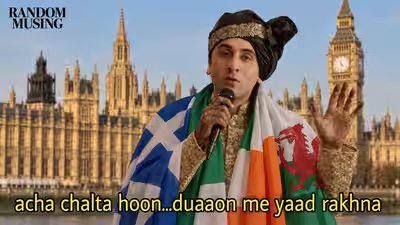
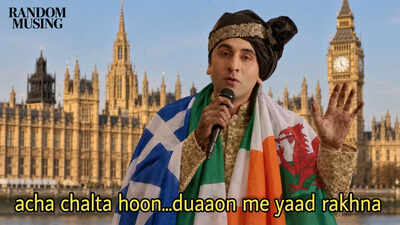
The Partition of India — and before it the Partition of Bengal — were among the most consequential acts of British imperial cartography, with the former leaving countless dead, a subcontinent in perennial trauma and perhaps even helping create some of the geopolitical conditions from which pan-global Islamist terrorism later emerged with a little help from Uncle Sam. Ergo, there is a little schadenfreude in seeing talk of partition engulf the country that facilitated it: the United Kingdom, or should we call it the Divided Kingdom?The latest shot comes from the person whose logorrhoea has truly upended the world order carefully put in place after the Second World War. Speaking in Ireland, Donald Trump put the fat in the fire by saying he would “love” to see a “united” Ireland, saying it was inevitable and “may as well happen now”. UK PM Andy Burnham – who, if you squint your eye, looks like an AI-generated image of Keir Starmer – pushed back, only for Trump to double down and call it “pretty cool”.Now, for Trump, saying something is “pretty cool” could be as serious as toppling a Supreme Leader or having regular Coke instead of Diet Coke, but his statement certainly caused some excitement.Now here’s the reason why Trump’s rhetoric is a little more than just words.For perhaps the first time in their history, Ireland, Scotland and Wales are led by parties and politicians who want to change their nations’ relationship with the UK, a sort of Brexit, if you will, except this was never how Brexit was supposed to work.The Brexit Referendum in 2016, which is as hackneyed as Yes Minister’s British sausage plot to get Jim Hacker elected as PM, has consumed six Prime Ministers, effectively turning 10 Downing Street into an AirBNB.Instead of freeing the UK from the bureaucrats in Brussels, it has instead put a man who recently beat a novelty candidate wearing a trash can within touching distance of the Prime Minister’s seat. And now it has created a political situation where the UK might finally become “divided”. Britain has survived the Spanish Armada, Napoleon, two world wars, the loss of empire, the Troubles, Brexit and even Meghan Markle — but it might not survive Donald Trump.Scotland wants independence, Plaid Cymru (Wales’ governing party) is toying with the idea, and Sinn Fein wants Northern Ireland to leave one state and join another.In Ted Lasso, the Panglossian protagonist once asked: “How many countries are in this country?” And to explain that properly, we have to go back to the World Cup quarter-final when England faced Erling Haaland and Norway. In a way, Haaland’s predecessors, the Vikings, are responsible for what we call the United Kingdom. Unlike Haaland and his compatriots, who weren’t that successful while raiding the English defence, his predecessors attacked so much that the warring Anglo-Saxon tribes had to band together under Alfred the Great before Æthelstan put together what can be recognised as the first united England.Once it had set its own affairs in order, England turned to its neighbours, conquering Wales. The neighbour that gave the most trouble — and not just because of Mel Gibson’s antisemitic views — was Scotland, which continued to resist England.Edward I tried, William Wallace resisted, Robert the Bruce won at Bannockburn in the first Spiderman prequel and Scotland remained sovereign. And then in 1603 the joke wrote itself when James VI of Scotland inherited England. No invasion was needed, but the two kingdoms retained separate parliaments and laws, perhaps because the Scots were always wary of the English.That arrangement spectacularly imploded under James’s son Charles I, whose quarrels with Parliament eventually produced civil wars across England, Scotland and Ireland and ended with the rather permanent constitutional remedy of chopping off the king’s head. Ireland was already deeply entangled in the mess after the rebellion of 1641, and when Oliver Cromwell crossed the Irish Sea in 1649, he ended up causing far more damage than the Dothraki and the Unsullied did on Westeros.Abolishing the monarchy, Lord-Protector Cromwell briefly pulled England, Scotland and Ireland into one republican experiment which was as successful as the MAGA Republican experiment. Cromwell’s Puritan regime was so maudlin that the entire kingdom decided that it was considerably less irritating to have a Crown than a prude in charge.While the monarchy returned with Charles II, the constitutional problem remained as all three countries continued to behave on their own. The marriage between England and Scotland began properly in 1707 because England wanted a common Protestant succession and Scotland’s elite wanted to dip their fingers into the giant and ever-expanding pie that was the English colonial markets. The Acts of Union created Great Britain, and Scots subsequently became energetic participants in the British Empire.Ireland, however, kind of like Roy Keane in his last days at Manchester United, continued to rage. It had been under varying degrees of English control for centuries, beginning with the Anglo-Norman invasion, through the Tudor conquest and Cromwell’s campaigns. It still remained a separate kingdom, and after the 1798 rebellion and with the French making eyes, London decided enough was enough. While the Irish Commons initially rejected the offer, palms were greased with peerages, pensions and patronage to create the United Kingdom of Great Britain and Ireland.Like Roy Keane at Manchester United after his epic MUTV rant, the arrangement didn’t last, with Irish nationalism, the Easter Rising and the War of Independence eventually producing the Anglo-Irish Treaty, and in 1922 most of Ireland chose Brexit while Northern Ireland remained.As the empire crumbled under its own guilt, Westminster tried devolution, with the Scots getting a parliament, Wales an assembly and the Good Friday Agreement creating power-sharing in Northern Ireland in an awkward situationship in which, if a majority of Northern Ireland wanted it, it could become a part of a united Ireland.
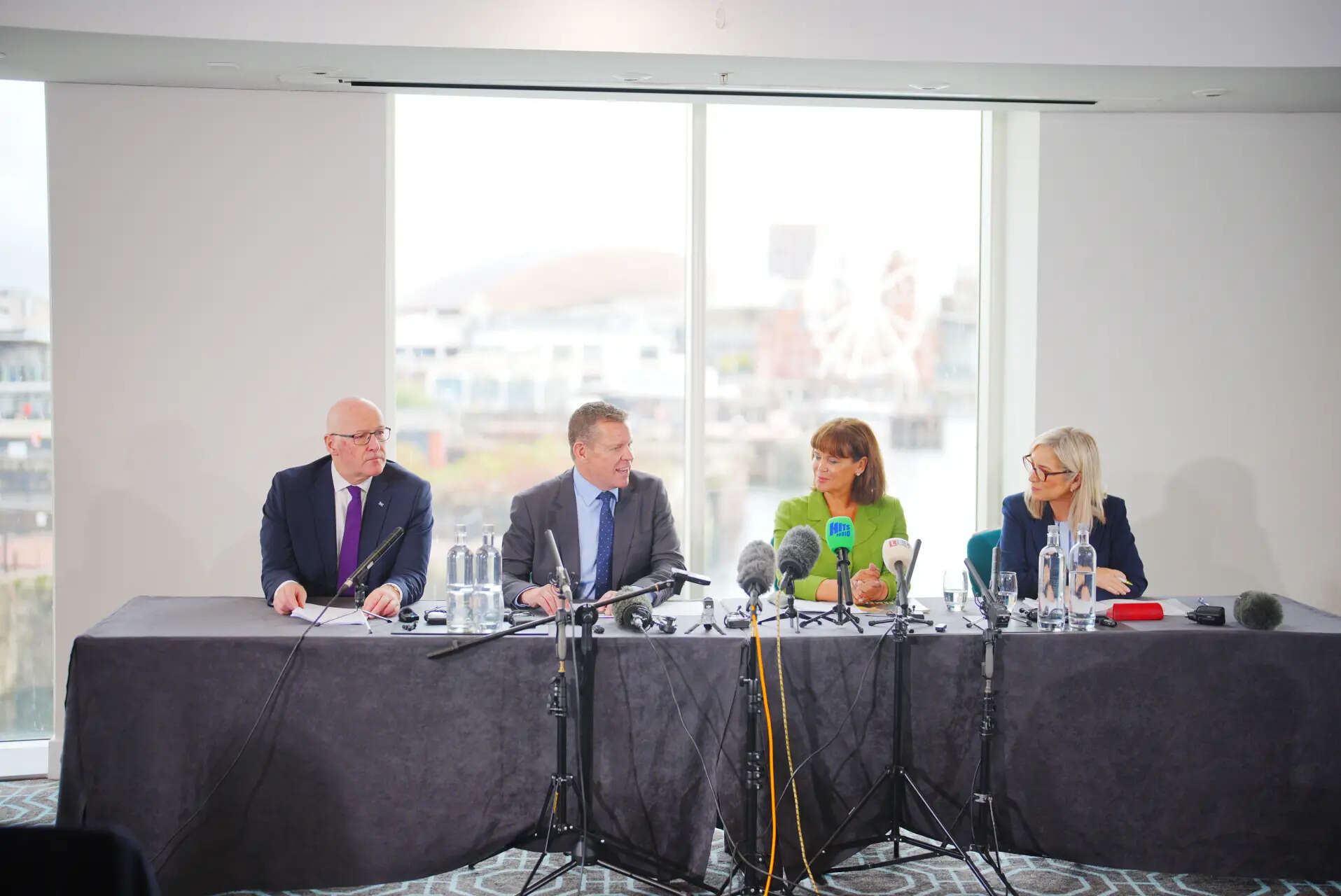
From left, First Minister of Scotland John Swinney, First Minister of Wales Rhun ap Iorwerth, Sinn Fein leader Mary Lou McDonald and First Minister of Northern Ireland Michelle O’Neill, during a meeting to discuss the “pursuit of a different attitude” from the UK Government and the future of independence for their respective countries, in Cardiff, Wales, Monday, Sept. 14, 2026. (Ben Birchall/PA via AP)
And things roiled on, despite the fireworks brought by the Irish Republican Army (IRA) – seldom referred to as terrorists because they are white – ending with the aforementioned Good Friday Agreement in 1998. IRA’s political wing Sinn Fein was admitted into the multi-party peace talks and by 2005 the IRA put down its arms, realising there were better ways to make noise.And then came Brexit, in which Scotland voted heavily to Remain, Northern Ireland voted Remain, while Wales voted Leave alongside England.Now Scotland has the most mature independence movement, with the SNP holding 58 and the pro-independence Greens 15, giving them 73 in a 129-seat assembly.While Scotland has a fair degree of freedom with its own parliament and legal system, foreign affairs, immigration and monetary policy are still decided in Westminster. Now Scottish independence enthusiasts argue that leaving the UK would allow Scotland to pull off its own reverse Brexit and rejoin the EU, which would be better for Scottish economic policy and allow it to have its own affairs.Meanwhile, the unionists – those who want things to remain as they are – and who, funnily enough, are the most hardcore Trump supporters, argue that the fiscal deficit would make it difficult, and with independence would come arguments about tax, spending, debt, and basically that adulting will be too expensive, something every youngster learns once they leave their parents’ house.Wales, on the other hand, the least insouciant of the English neighbours, has Plaid Cymru in charge. The desire for independence is less than Scottish levels, and while it has ruled out a referendum, it argues that Wales could have a whale of a time if it possessed a little more freedom.And Northern Ireland’s break for freedom is more Winky than Dobby, because Sinn Fein isn’t proposing a new country: it just wants reunification with an existing EU member state.Of course, none of this could have happened without Brexit, which, with the benefit of hindsight, tells us that one shouldn’t leave the fate of a nation to overgrown public schoolboys who have to remain tight-lipped about hogs to call referendums that really aren’t needed. Despite a majority after many years of torrid Tory misrule, Labour is hurtling from one disaster to another and looks set to say ‘fare thee well’ if an election was held. But perhaps the biggest irony was Nigel Farage, Donald Trump’s most beloved British politician, who loves crypto as much as his special friend, having to break from his MAGA buddy to insist that Northern Ireland will remain an integral part of the UK.The irony is quite delicious because Great Britain has spent many centuries drawing borders, joining kingdoms, partitioning countries and deciding what flag will flutter over people’s heads. At one time it had an empire so vast that the sun didn’t set on it. Whether the United Kingdom becomes divided is ultimately for the people living in its constituent nations to decide – a right that many who were ruled by Great Britain never had – but for those of us who lived under the yoke of colonial rule, there’s a certain historical irony in watching Britain discover it’s considerably less fun when someone draws and redraws borders based on their own fancies.