




Red Pawns, Red Soldiers: How the Bolsheviks built a chess superpower | Chess News
The latest Chess Olympiad began in Samarkand, a historic city in Uzbekistan, this week. Uzbekistan has been making huge strides in chess. The current challenger to D. Gukesh’s world championship title is Javokhir Sindarov, a young phenom from Uzbekistan. Uzbekistan won gold in the 2022 Olympiad in Chennai. It is also no coincidence that Uzbekistan was once a Soviet republic like many other modern powerhouse nations in chess.The erstwhile Soviet Union entered the Chess Olympiad for the first time in 1952 in Helsinki and won it. Between its first appearance in 1952 and final appearance in 1990, it participated in nineteen Olympiads and won eighteen while finishing second in the lone Olympiad it did not win.After the collapse of the USSR, Russia won the next six Olympiads in succession between 1992 and 2002. Ukraine and Armenia, earlier part of the Soviet Union, won the next five Olympiads between 2004 and 2012 (while Russia finished second in three out of those five). Uzbekistan won it in 2022. It is an extraordinary record for a game that did not originate in Russia.The seeds of this dominance were laid a century ago in the aftermath of the Bolshevik Revolution. Chess had a respectable history in imperial Russia. It was played by Tsarist aristocrats and members of the urban intelligentsia; Leo Tolstoy was an enthusiast.While the Bolsheviks dismantled much of what existed in the Tsarist regime, including its cultural symbols, they actively promoted chess and appropriated it as a tool in their vision of building a new nation.
Chess as a tool to build the New Soviet Man’
Alexander Ilyin-Zhenevsky, an unusual combination of chess master, revolutionary and military official, helped bring that vision to fruition. During the Civil War, he worked with Vsevobuch, the system of universal military training created by the new government. Ilyin-Zhenevsky believed that chess could train qualities useful to a soldier: cold nerves, long-range foresight, dynamic decisions under pressure, and iron discipline.The idea found a receptive audience. In October 1920, sixteen of the country’s strongest players assembled in Moscow for the All-Russian Chess Olympiad organized by Vsevobuch. The nascent post-revolution Soviet state was dealing with severe food shortages, and it was expected that the tournament participants would get generous rations from the military. However, with playing conditions apparently poor, the players were nearly struck over inadequate food.Ilyin-Zhenevsky later recalled that seven players signed a petition threatening to strike unless the food improved and a cigarette ration was added. Alexander Alekhine, who won the tournament and would later be counted as the first Soviet chess champion, did not sign the petition but said he would stand with those players, because he didn’t think it right to play against hungry opponents.
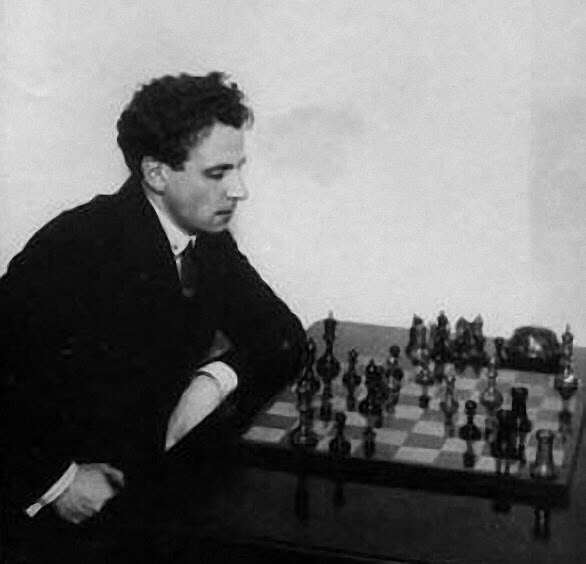
Ilyin-Zhenevsky
Alekhine married a Swiss woman and left Soviet Russia in 1921. He spent the rest of his life in Europe and espoused antisemitic views during the Second World War. But that is for another column.The Bolshevik thinkers spoke of creating a “New Soviet Man” who was educated, disciplined, rational and committed to collective life. They viewed Chess as a perfect vehicle to create the society they wanted. Chess needed little more than a board, pieces, and two chairs and could be played anywhere. It rewarded study, self-control and contained no element of chance. Chess was also intellectual without being elitist.
How the Bolsheviks turned chess into a mass movement
If workers could be taught the game once reserved largely for educated society, chess could become evidence of cultural advancement itself. By the middle of the 1920s, the chess movement had expanded to masses. Chess clubs appeared in factories, and workers’ organizations, newspapers and magazines published chess material, and tournaments attracted increasingly large audiences.The Soviet state also tried to convert chess into mass entertainment. In 1924, it organized a public spectacle on the grounds of Leningrad’s Palace Square. Sailors and Red Army soldiers became human chess pieces on a giant board, moving across the square before a crowd of spectators.The symbolism would have been difficult to miss.
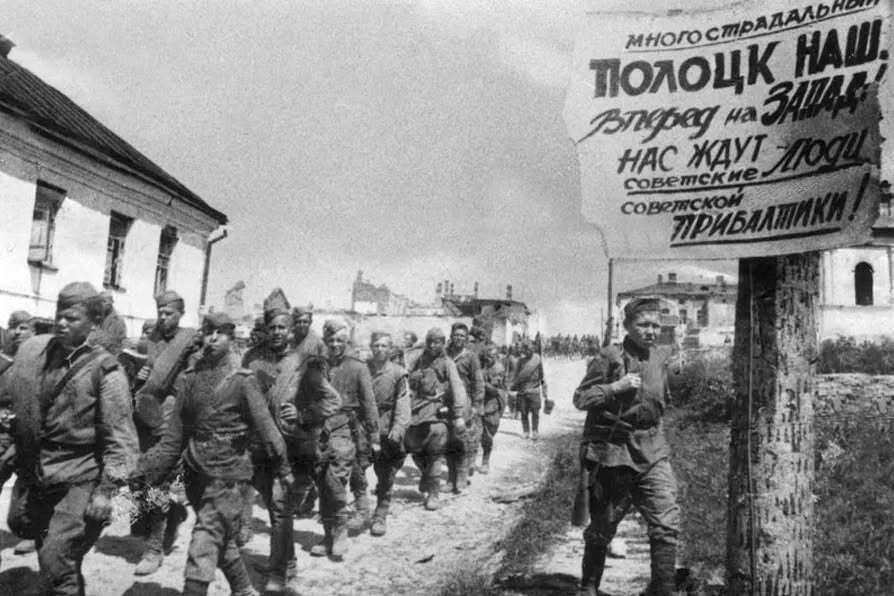
Red Army soldiers
The former Palace Square, the great ceremonial space of imperial Russia, was now hosting chess played by representatives of the revolutionary state.The All-Union chess and checkers congress of 1924 placed chess under the physical culture bureaucracy and put Nikolai Krylenko in charge; 64 was founded the same year with Krylenko as editor. Krylenko was a senior revolutionary who had briefly served as the Bolsheviks’ supreme commander-in-chief in the winter of 1917-18 and later became People’s Commissar for Justice.Krylenko had little interest in chess as an elegant diversion.He believed it should serve society. The game, in his conception, formed part of the wider cultural revolution and should contribute to the intellectual education of Soviet citizens.The Soviet state gradually built an ecosystem: chess sections, coaches, tournaments, publications and a ladder through which promising players could rise.
From workers’ clubs to a Soviet chess machine
The results of these decades of state support became visible to the world after the Second World War. From Mikhail Botvinnik onward, Soviet players dominated the world championship for decades, barring a brief interlude when Bobby Fischer of America upended Soviet hegemony. Botvinnik, Smyslov, Tal, Petrosian, Spassky, Karpov and Kasparov were very different personalities with very different playing styles, but all emerged from the Soviet state chess system and went on to be counted as among the all-time greats of the game.The Soviet chess machine began during a civil war, when an old Bolshevik chess master, Ilyin-Zhenevsky, persuaded a military bureaucracy that thirty-two wooden pieces on sixty-four squares could help build better revolutionaries.READ ALSO: Italian jobs, French connections and Berlin walls: Chess’s European tourIlyin-Zhenevsky died in a German bombing raid in 1941during the siege of Leningrad. Krylenko, another Bolshevik leader who played a key role, was himself arrested in 1938, sentenced by the Military Collegium, and executed in July 1938. The man who helped build Soviet chess as an instrument of the state was killed by that state.