





Sebi plans curbs on terminal misuse, graded compliance norms for stock market intermediaries
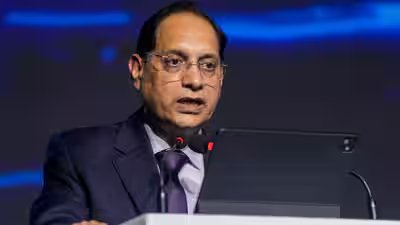

NEW DELHI: Market regulator Sebi is planning measures to prevent the misuse of brokers’ trading terminals while also considering different compliance requirements for brokers based on their size, clients and use of technology.Securities and Exchange Board of India (Sebi) chairman Tuhin Kanta Pandey announced the plans on Saturday at the 16th ANMI International Capital Market Convention in Mumbai. He also spoke about improving cybersecurity, testing artificial intelligence (AI) tools safely and boosting trading in corporate bonds.“We are developing a framework to put in place safeguards to prevent misuse of trading terminals,” Pandey said at the event organised by the Association of National Exchanges Members of India (ANMI).Under the proposed system, compliance rules would vary according to the size of a brokerage firm, its clients and its dependence on technology. Sebi also plans to bring inspection portals onto a single digital platform to make supervision faster and more consistent.Pandey urged market participants to treat cybersecurity as a business priority rather than an IT expense. He also called on them to test their systems and prepare for possible failures.
AI safeguards and digital market infrastructure
Sebi is exploring an AI sandbox in which new tools can be tested safely, while providing innovators with regulatory clarity. The regulator is also finalising guidelines for the responsible use of AI, with provisions for accountability, data controls, kill switches and human oversight, in line with the International Organization of Securities Commissions’ (IOSCO) toolkit.“We are finalising the guidelines on the responsible use of AI. They will follow a tiered approach, with clear accountability, data controls, kill switches and human oversight, in line with IOSCO’s toolkit,” he added.The regulator’s technology agenda also extends to the corporate debt market. A market-making framework is being developed to encourage secondary trading in corporate bonds, while the next phase of Demat 2.0 will involve tokenised corporate bonds trading in the secondary market.“In the next phase of Demat 2.0, tokenised corporate bonds will trade in the secondary market, bringing better liquidity, lower settlement risk, and faster access to funds,” he said.Sebi is separately reviewing short selling and securities lending and borrowing to improve liquidity and price discovery. Rules for depository participants are also being reworked to simplify compliance and strengthen defences against fraud.
Pandey urges brokers to focus on investor risks
Turning to retail participation, Pandey said the next wave of growth in broking would come from towns and villages rather than big cities. Citing Sebi surveys indicating interest among Indians in investing in markets, he called on the industry to help investors make informed decisions and remain invested for longer.He urged brokers to look beyond completing know-your-customer (KYC) formalities and pay attention to whether the risks their clients take are in line with their financial resources.“You are often the first to see when the risk they take outgrows their resources. So think of KYC as “Know Your Client’s Needs.” Make it an ongoing conversation, not a one-time form-filling exercise.”Pandey said investors who understood the risks of their investments were better placed to make informed decisions and stay invested.“A client who understands risk invests wisely and stays invested longer. That is good for the client, for you and for the market,” he added.Outlining Sebi’s broader priorities, Pandey said the regulator’s roadmap centred on simpler rules, deeper markets, responsible technology and wider access.“Our roadmap has four parts: simpler rules, deeper markets, responsible technology, and wider access,” he reiterated.