





The extraordinary journey of AI researcher Trapit Bansal
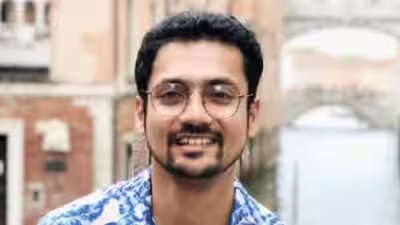
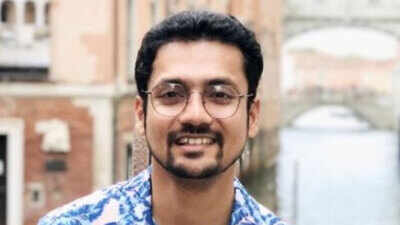
Artificial intelligence is creating a new generation of global technology stars, and one Indian-origin researcher has recently become the centre of attention.Last year, Trapit Bansal made headlines after reports suggested that Meta offered him a compensation package worth nearly Rs 800 crore to join its newly created AI division.The number itself grabbed attention. But a closer look at his educational and professional journey reveals a far more important story.Behind the headlines lies more than a decade of higher education, research, internships and specialised work in artificial intelligence.
The journey began at IIT Kanpur
Trapit Bansal completed an integrated M.Sc. in Mathematics and Statistics from IIT Kanpur between 2007 and 2012.Unlike many technology professionals who begin with a traditional computer science degree, Bansal built a strong foundation in mathematics and statistics, two disciplines that form the backbone of modern artificial intelligence.After graduating from IIT Kanpur, he joined the Machine Learning Lab at the Indian Institute of Science (IISc), Bengaluru, where he worked as a research assistant for more than two years.His early research focused on Bayesian modelling and inference methods, giving him exposure to advanced machine learning techniques long before the current AI boom.
From India to the United States for higher studies
Bansal later moved to the University of Massachusetts Amherst to pursue higher education in computer science.He completed both his master’s degree and his Ph.D. at the university, spending more than six years as a graduate research assistant.His doctoral research focused on natural language processing, deep learning and meta-learning, fields that have become central to today’s AI revolution.His academic journey demonstrates an important lesson for students: expertise in artificial intelligence is often built through years of specialised study rather than through short-term courses alone.
Internships at the world’s biggest technology companies
Even before joining OpenAI, Bansal had already built an impressive research portfolio.He completed research internships at several of the world’s most influential technology companies, including Facebook, Google, Microsoft and OpenAI.At Facebook, he worked on deep learning for natural language processing.At Google, his research focused on deep learning and knowledge graphs.At Microsoft, he explored meta-learning techniques for natural language processing.He also worked as an OpenAI research intern, contributing to projects involving competitive self-play in multi-agent reinforcement learning.For many students, these internships highlight another important lesson: research experience often opens doors to opportunities that traditional classroom learning alone cannot provide.
His role in developing advanced AI systems
In 2022, Bansal joined OpenAI as a member of the technical staff.According to publicly available information, he worked on reinforcement learning and reasoning-focused AI models alongside some of the most influential researchers in the field, including OpenAI co-founder Ilya Sutskever.He has been credited as one of the key contributors to OpenAI’s reasoning models, including the technology behind the o1 model family.In 2025, he moved to Meta as a founding researcher for its new AI research division, where he is now working on the next generation of advanced AI systems.His story serves as a reminder that behind every seemingly unbelievable salary package lies years of learning, research, experimentation and persistence.For students chasing quick success, Trapit Bansal’s journey offers a powerful message: sometimes, the most valuable investment is not in a job offer, but in developing expertise that the world eventually cannot ignore.Disclaimer: This article is based on publicly available information, professional profiles and media reports. Compensation figures mentioned in the article have not been independently verified by The Times of India Education.