






Vietnamese proverb of the day: “The cat praises its tail to be long” warns us against falling into the trap of self-admiration, arrogance
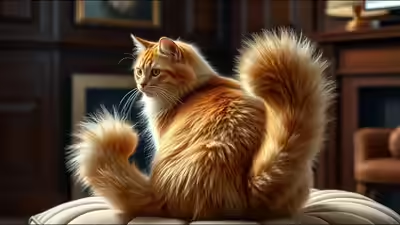

Self-love is good but not to that extreme when it clouds one’s ability to see their own fault. And that’s what this Vietnamese wisdom reminds us in a humorous proverb, which says that the cat thinks its tail is the longest and most beautiful. While it is a very common saying in Vietnam, this proverb is not popularly known outside the country, though there are plenty of other proverbs conveying the same caution.Today’s Vietnamese proverb of the day is: “Mèo khen mèo dài đuôi” which literally translates to “The cat praises the cat’s own tail for being long.”
Literal meaning of the Vietnamese proverb
In Vietnamese culture, cats are often depicted in folklore as clever but also somewhat vain, sneaky, or self-centered. The proverbial cat is not praising another cat, its praising its own tail. A long tail does not give a cat any extra benefit; it’s just a physical feature but the cat thinks it is superior to others.
What is wrong with self-praise?
If we don’t praise ourselves, who will? What is wrong with self-praise in an age of pomp and show? The proverb rightly addresses the issue and points out that the problem lies in pompousness, in being proud of something which is of little value. It also blinds us to looking within ourselves and discovering more qualities of worth, rather than seeing our physical appearance and admiring it.When someone aggressively promotes themselves, their achievements, or their family background, Vietnamese culture views it not as confidence, but as a lack of refinement. The proverb uses gentle irony and humor to mock this behavior, subtly reminding people that self-praise diminishes one’s actual worth in the eyes of the community.
Similar proverbs around the world
“Every crow thinks its own chick is the whitest” is an English proverb that conveys the same blindness as every crow thinks their chick is the whitest.“To toot your own horn”, “To blow one’s trumpet” are other English sayings to the same effect.
Why the Vietnamese proverb is relevant in today’s age, which promotes self-love and self-praise
Social media runs on self-praise. And as people are hooked to social media platforms, scrolling through the unabashed display of this pompousness, this proverb is a reminder to be rooted. The timeless Vietnamese proverb works as a mirror held up to human vanity. It reminds us that true merit requires no self-advertisement. When you are genuinely skilled, kind, or successful, your actions will speak for you, and the world will notice without you having to point it out. By mocking the self-absorbed cat admiring its own tail, the proverb teaches us to practice humility, to seek objective self-awareness, and to remember that the most beautiful traits are those recognized by others—not demanded by ourselves.The proverb teaches that personal experience often shapes our judgments more than objective evidence. Whether in family life, politics, business, education, or social media, people naturally praise the qualities they already possess. The next time someone confidently declares that their own method, culture, profession, or opinion is unquestionably the best, this old Vietnamese proverb offers a gentle reminder: perhaps it is simply another cat praising the length of its own tail.