





What is it and why it’s at risk
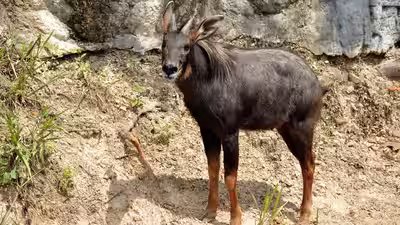
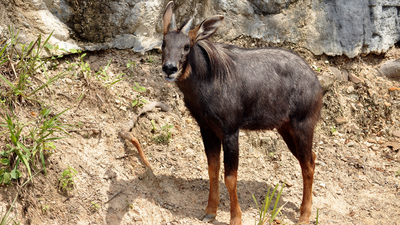
A 41-year-old man was arrested in Mizoram’s Kolasib district for poaching and killing a serow, locally known as ‘saza’, the state animal of Mizoram. According to officials of the Environment, Forests and Climate Change Department, the accused, identified as R.T. Thanga, a resident of Kawnpui Hmarveng locality, was arrested by officials of the Kawnpui Forest Range during an operation, as mentioned in an AIR report.Officials said that Thanga was found in possession of the protected animal’s meat and trophy, and a case has since been registered, with further investigation underway.Cases like this one aren’t just about a wildlife law being broken; instead, they tell us about the extent of vulnerability animals like the serow face, which are tied to the identity of states as well.This brings us to the question: What is the serow, and what does it look like?What is the Serow: the state animal of MizoramThe serow found in Mizoram is officially the Himalayan Serow, known locally as ‘saza’ in the Mizo language. It is a goat-antelope, part of the Bovidae family, the same family that includes cattle, sheep, and goats, whose body is built specifically for life on steep, rugged terrain.According to the Environment, Forests and Climate Change Department, Government of Mizoram, the species observed in the state’s forests is more precisely the Red Serow, locally called Saza, one among a long list of mammals native to the region’s dense forest cover.What it actually looks likeDespite being present in the goat-antelope classification, the serow’s appearance is a bit of an odd mix. It’s often described as resembling a cross between a goat, a donkey, a cow, and even a pig, due to a combination of physical traits that it possesses.The animal has a strong, medium-sized build with a coat ranging from dark brown to reddish-brown or grey, often marked by a noticeable white patch on its throat and sometimes its chest. It also has donkey-like ears, a thick neck, short limbs, and short black conical horns present in both males and females, though they are more prominent in the males.Where do Serows live?Serows are mountain specialists. They live in hill forests and rocky terrain, typically at elevations between 500 and 4,000 metres, making them flexible climbers well suited to Mizoram’s steep, forested landscape. This specific habitat need is part of why the species is so sensitive to disturbance as dense, undisturbed forest cover isn’t optional for them, it’s essential to their survival.It is a vulnerable species under legal protectionThe Himalayan serow is listed as ‘Vulnerable’ on the IUCN Red List of Threatened Species, and it also appears in Appendix I of CITES, the international agreement regulating trade in endangered species. Within India, it holds the highest level of domestic protection too; the animal is protected under Part I, Schedule I of the Indian Wildlife (Protection) Act, 1972. Schedule-I status means poaching or trading in the species carries some of the strictest penalties stated under Indian wildlife law.