





When chemistry beats caste: A quiet revolt is rewriting the oldest rule of arranged marriage | India News
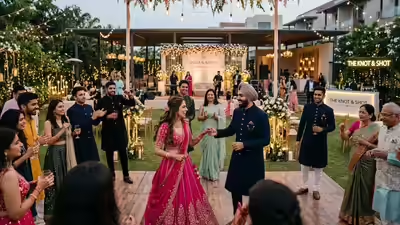
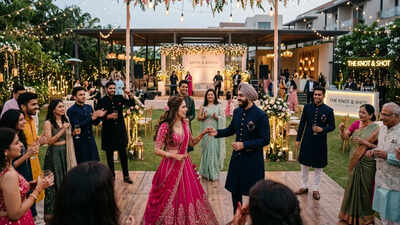
For generations, the first question in an arranged marriage was rarely about personality, ambitions or emotional compatibility.It was, “which community?”Caste, sub-caste, religion, family background and horoscope formed the first line of screening. Compatibility came much later, if at all. If a suitable match could not be found within the community, families often waited longer rather than expanding the search.Today, that hierarchy is beginning to change. Across India’s matchmaking ecosystem — from traditional independent matchmakers to curated matrimonial services and intentional dating platforms — one pattern is emerging: compatibility is steadily replacing community as the most valuable currency.This does not mean caste has vanished from the marriage conversation. Far from it. Families still prefer matches within their communities where possible. But increasingly, community is becoming one consideration among many rather than an immovable condition. Shared values, emotional maturity, lifestyle, career ambitions, financial outlook and long-term goals are taking precedence, particularly among educated urban Indians who often make the final decision themselves.The evolution reflects wider social shifts. Indians are marrying later, pursuing demanding careers, living independently across cities and countries, and looking for partners who fit the life they have built rather than merely satisfying social expectations.
From biodata to compatibility
For Gurgaon-based matchmaker Vaini Mehra, founder of Shaadi Vibes, modern matchmaking starts where traditional matchmaking often stopped. Rather than relying primarily on age, salary, height or horoscope, Mehra says she first seeks to understand the person behind the profile.“I connect deeply with the individuals themselves, rather than just their parents, to understand their current lifestyle, career goals, family values and true preferences,” she says.Potential brides and grooms are pushing background checks to avoid confusion later. That has pushed platforms to double down on user intent. Mehra prefers meeting prospective clients personally, either with their families or in a casual setting, before introducing them to a potential partner. She says her database is built only through trusted references.“If I sense that someone is dodging questions or uncomfortable sharing complete information, I will pause their registration until they are fully ready to be transparent,” she adds. That process, she says, enables her to answer questions that algorithms cannot.Sidhharrth S Kumaar, founder of NumroVani, echoes the same sentiment. “The biggest misconception today is that more profiles mean better choices. Most families are not looking for another hundred profiles, they are looking for clarity.” He adds that finding a suitable match is not the end goal but the beginning of a much longer journey. “We don’t see our role ending with an introduction. Relationship coaching is part of our process because marriage is not just about choosing the right person, it’s also about preparing two people for the life that follows.“
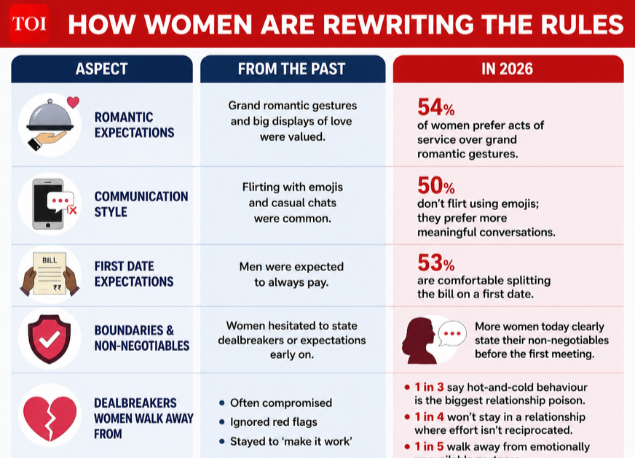
women reshaping rules of marriage
With technology playing a supporting role, the process has become more efficient, but it is never left entirely to algorithms. “Technology helps us manage the process. Personal conversations help us understand people.”
The rise of intentional matchmaking
The transformation of arranged marriages is unfolding alongside growing fatigue with casual dating. Platforms say users are increasingly rejecting endless swiping in favour of curated introductions.Anirban Banerjee, co-founder and CMO of Flutrr, says people have grown tired of treating dating as entertainment. Instead of browsing hundreds of profiles every day, users prefer a limited pool of matches that are actually compatible. “The platform is designed like a shortlist, not a marketplace.”Flashy profiles are no longer the focus; conversations around family, money, ambition, mental health and personal values are what seekers want. “Our job is to filter noise and surface people who make sense for your life, not tell you who to fall for.”The shift mirrors what many traditional matchmakers observe. Technology may have changed the medium, but the search has become more deliberate.According to Banerjee, intentional dating in 2026 reflects the realities of modern urban life. “You’re balancing work, family expectations, rent, maybe even thoughts of moving cities or buying a house. In that reality, dating has to feel clearer, or it just becomes one more drain.” Discussions go beyond favourite colours and hobbies; people now address marriage timelines, children, financial priorities, equality within relationships and lifestyle expectations far earlier than before.That behavioural shift is increasingly spilling into arranged marriages. Even when families introduce prospective matches, the final decision now depends on whether the individuals themselves feel emotionally and practically compatible.
Women are changing the conversation
Perhaps the biggest catalyst behind this transformation is women. Across multiple platforms, women are becoming more vocal about expectations, dealbreakers and boundaries before agreeing to meet someone. According to Flutrr’s internal surveys, women no longer hesitate to state, “This is what I’m looking for,” and just as clearly, “This is what I will not tolerate.”Women are asking about relationship intent, equality, family expectations, therapy, drinking habits, living arrangements and emotional maturity before investing time in a relationship. “When the responses feel evasive or inconsistent, most simply step back,” Banerjee says.He believes these changing expectations are influencing men as well. “Being respectful, clear and emotionally present is now seen as the bare minimum, not a bonus.”The trend is visible everywhere. According to Chandni Gaglani, executive vice president and head of Aisle, the company’s pan-India studies show that 54% of women prefer acts of service over grand romantic gestures, 53% are comfortable splitting the bill on the first date and half prefer meaningful conversations over flirting through emojis. The platform also found that one in three singles consider inconsistent behaviour the biggest relationship poison, while one in five walk away from emotionally unavailable partners.“Intentional dating today is about creating space for authentic conversations, mutual respect and relationships built on shared commitment rather than endless choice,” Gaglani says.
Experience is replacing tradition
Matchmaking usually conjures images of young bachelors, but the subject addresses a wider audience. The user-base of married individuals seeking a second chance — due to divorce, separation or other causes — has expanded.Ravi Mittal, founder and CEO of Rebounce, says second marriages are driven less by social expectations and more by lived experience. Users openly discuss parenting, relationships with former spouses, financial responsibilities and emotional expectations before deciding to move forward. “People are openly talking about how things ended in their last marriage, they are discussing parenting style, dynamics with the ex, and touching on more sensitive topics early on.“
Matchmaking usually conjures images of young bachelors, but the subject addresses a wider audience. The user-base of married individuals seeking a second chance — due to divorce, separation or other causes — has expanded.
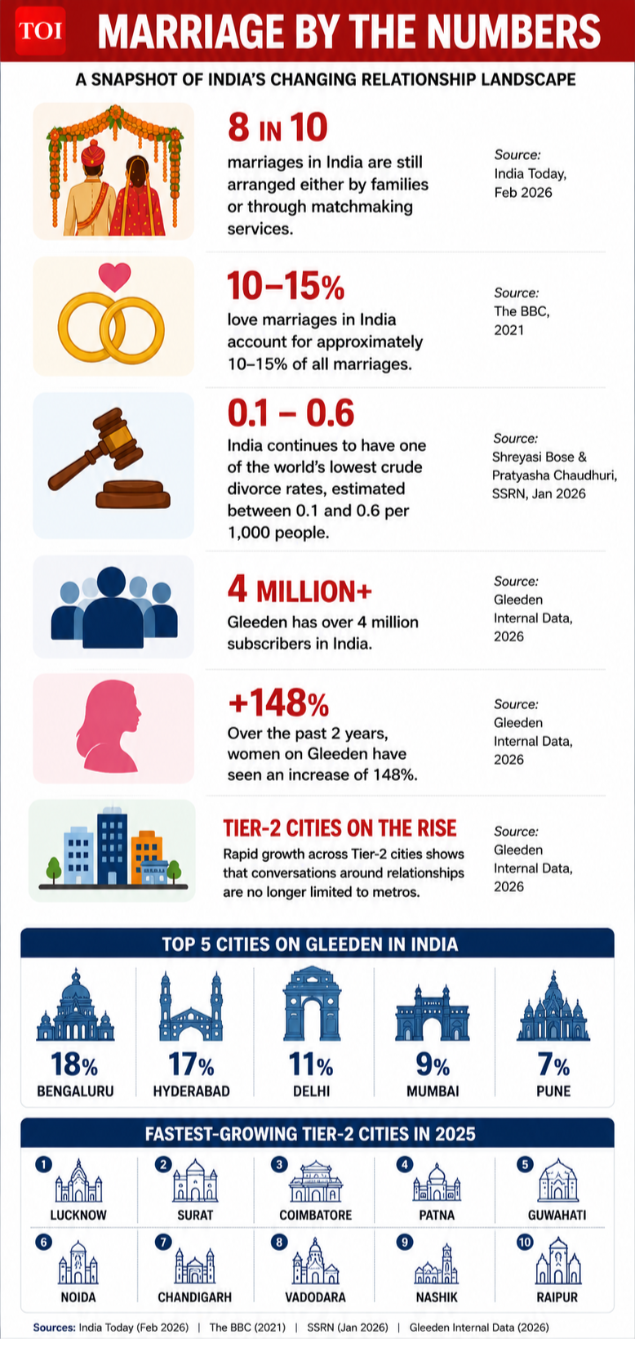
According to Mittal, people entering second marriages already understand what matters in sustaining a relationship. “They know what really makes it sustainable, and no one would say caste or horoscope is the answer.”Similarly, Sybil Shidell of Gleeden says second marriages are increasingly shaped by emotional compatibility rather than external expectations. “A second marriage is often shaped less by external expectations and more by lived experience.” She says people increasingly prioritise communication, respect and shared goals over conventional filters.
Why compatibility is also creating new pressures
The trend toward matching wavelengths over social frameworks has a flip side. When people feel pressured to present themselves as the ideal partner, some resort to deception. Recent cases involving fabricated identities, forged qualifications, fake employment records and other fraud linked to relationships show the immense pressure individuals face.But that does not guarantee lifetime happiness.
Sociological lens on pressure and deviant behaviour
According to Dr Suyog G, assistant professor and area head of sociology at the School of Humanities and Social Sciences at Jain (Deemed-to-be University), emerging patterns around marriage-related pressures and deviant behaviour can be understood through a layered sociological lens.At the core is anomie, a condition in which traditional social norms weaken even as aspirations rise. “As people pursue socially desirable goals like marriage, some may begin looking for alternative, and at times criminal, means of achieving them,” he explains, situating individual actions within a broader breakdown of normative boundaries.This tension is compounded by relative deprivation, where comparisons with peers intensify feelings of inadequacy. In an increasingly visible and competitive social landscape, individuals measure their worth against others who appear more successful or desirable in the marriage market. When that perceived gap widens, the response is not always constructive.Social conformity — the desire to meet expectations set by family, relatives and the wider community — also shapes personal decisions. It can push individuals toward unethical choices if those are seen as necessary to secure approval or avoid rejection. These dynamics are especially pronounced in India, where marriage is rarely treated as a purely individual choice. “Marriage is a very emotional commitment. It is not just about the bride and groom. It is about two families,” he says, underscoring how alliances often extend beyond individuals to encompass social standing, cultural compatibility and family reputation.Despite rapid economic growth and technological advancement, the structure of the Indian marriage system remains relatively rigid in many communities. Factors such as caste, community alignment and family approval continue to play decisive roles, particularly in regions where endogamy remains the norm. “The fear of society often prevents young people from openly expressing their choice of partner before their families. Some begin looking for alternatives instead,” Dr Suyog says, linking structural rigidity to individual behaviour.At the same time, hyper-modernisation and westernisation act as key influences, driven largely by unprecedented access to information. Young Indians are exposed to diverse ideas about relationships, autonomy and personal freedom. Yet even as these new influences expand horizons, traditional ideals continue to hold significant cultural weight.
The new arranged marriage
India’s arranged marriage system is not disappearing. It is adapting.Parents continue introducing prospective matches. Communities continue influencing decisions. Horoscopes continue to matter in many households. But increasingly, those factors are parts of a broader conversation rather than determinants.The defining questions today are no longer limited to surname, caste or community. They are about emotional maturity, career ambitions, financial compatibility, family expectations, mental health, parenting, equality and shared life goals.The old arranged marriage model asked whether two families matched. The emerging model increasingly asks whether two people can build a life together first, and whether their families can grow into that partnership afterwards.That may be one of the most significant shifts India’s marriage market has witnessed in a generation.