





Why a 24-year-old founder is taking India’s most ambitious data storage bet from Bangalore to US


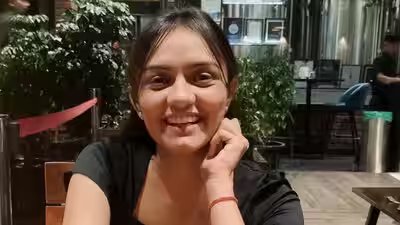
Brain drain has always been a topic that has made us fret and sweat over. But the main question is what is making the Indian youth knock on the doors of overseas employers? When a 24-year-old entrepreneur, Anagha Rajesh announced that her startup, BioCompute, would move from Bengaluru to San Francisco, it was easy to frame the decision as yet another case of Indian talent heading overseas. But Rajesh’s explanation tells a more uncomfortable story. It is not about a lack of ambition. It is about where groundbreaking ideas find believers. After spending two years building one of India’s most ambitious deep-tech ventures, Rajesh has concluded that the ecosystem that helped her reach the starting line may not yet be ready to help her cross the finish line.The decision raises a larger question that India has struggled with for decades: Can the country produce world-changing scientific companies, or will its boldest founders continue to seek validation elsewhere?
Building the future of data storage
The challenge Rajesh chose to tackle was never a conventional startup idea. BioCompute is attempting something that sounds like science fiction: storing digital information inside DNA.As artificial intelligence, cloud computing, and digital services generate unprecedented volumes of data, the world’s storage infrastructure is approaching a scale problem. Data centres consume enormous amounts of land, electricity and cooling resources.DNA offers a radically different possibility. Nature has been storing information efficiently for billions of years. A tiny biological structure can contain an astonishing amount of data. If scientists can successfully harness that capability, future storage systems could become dramatically smaller, denser, and more energy efficient than today’s hardware. That vision became the foundation of BioCompute.Founded in 2024, the company set out to make computing infrastructure operate with the efficiency of biological systems. It was an audacious goal, particularly for a first-time founder in her early twenties.Yet the startup steadily advanced. Over two years, Rajesh assembled a specialised team, raised more than ₹5 crore from investors including WTF Fund, Grad Capital and 1517 Fund, established laboratory operations, conducted thousands of experiments and built an end-to-end prototype.By her own account, BioCompute became the first laboratory in India to pursue DNA data storage at this scale. For many startups, that would have been the success story.For BioCompute, it was only the beginning.
The valley understood the vision
The transition from laboratory breakthrough to commercial product is often where deep-tech companies face their toughest test.Building prototypes is difficult. Building products that customers can actually use is exponentially harder. That next phase is precisely where Rajesh believes Silicon Valley offers advantages that India currently does not.In conversations with Vyom Bhatia on his channel, revolving around decision, one theme repeatedly emerged. People in San Francisco focused less on immediate revenue and more on what the company would need to achieve its long-term mission.Rather than asking how quickly the startup could generate income, they asked how they could help eliminate obstacles standing in the way of the technology becoming reality.For a founder building DNA storage chips rather than another software application, that distinction matters. Deep-tech companies often require years of research, large capital commitments, and extraordinary patience before producing commercial returns.Traditional startup metrics do not always fit businesses attempting to solve frontier scientific problems. Rajesh found an audience willing to think in decades rather than quarters.
India’s deep-tech dilemma
Her departure arrives at an awkward moment for India’s innovation ecosystem. The country has spent years celebrating its emergence as a startup powerhouse. Thousands of ventures have been created. Billions of dollars have been invested. Unicorns have become symbols of entrepreneurial success.Yet much of that success has been concentrated in software, consumer internet, fintech and platform businesses. Deep technology remains a different challenge altogether.Scientific ventures require longer timelines, larger research budgets, and investors willing to tolerate uncertainty for extended periods.Rajesh acknowledged that India has begun taking steps in that direction, citing growing support for deep-tech initiatives and research-driven funding programmes.But she remains unconvinced that the ecosystem is fully prepared for a product as ambitious as BioCompute’s. Her assessment touches a sensitive nerve. Many Indian scientists, engineers, and researchers working abroad often express a desire to return home. The country is not suffering from a shortage of intellectual capability.The missing ingredient, critics argue, is sufficient risk capital dedicated to breakthrough technologies. If talent exists but funding remains cautious, founders building moonshot technologies will naturally gravitate toward ecosystems where investors are more comfortable backing uncertainty.
The human cost of relocation
Behind every startup relocation announcement lies a more personal story. For Rajesh, moving BioCompute to San Francisco was not merely a strategic business decision. It also meant dismantling the Bengaluru operation that helped build the company from the ground up.Some of the most difficult conversations she faced involved members of her own team. These were researchers, engineers, and builders who had devoted countless hours to experiments, troubleshooting, and development. Together, they pursued a problem that few others in India were attempting to solve.The emotional weight of those departures was evident in her reflections. Last week, she publicly listed office furniture, laboratory equipment, and chemicals for sale, offering a stark visual reminder that startup transitions are not just about balance sheets and business plans. They involve people, careers, and dreams. Every relocation leaves something behind.
A test case for India’s future
BioCompute’s move should not be viewed simply as the story of one startup leaving India. It is a test case. If Rajesh succeeds in commercialising DNA data storage from San Francisco, her journey will become part of a larger debate about where frontier innovation is most likely to thrive.For India, the lesson may be uncomfortable but valuable. The country has already demonstrated that it can produce world-class talent. The next challenge is proving that it can also create an environment where the most ambitious scientific ventures choose to stay.Because the competition for the future will not be decided by who has the brightest minds. It will be decided by who is willing to bet on them.As BioCompute prepares to build its first DNA storage chips and take them to customers, Rajesh is embarking on what she describes as an exciting and nerve-wracking new chapter.For her company, the destination is San Francisco. For India, the bigger question remains unanswered: when the next Anagha Rajesh emerges, will she feel compelled to leave at all?