





Why Trump may have to target China to make its Iran ‘economic D-Day’ work
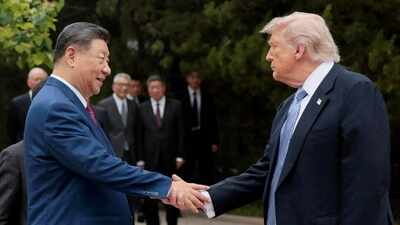
The Donald Trump administration’s road to economically choke Iran will have to go through China – if it wants to cripple the Middle East country. However, with a fragile trade peace in place between the world’s two largest economies, it’s unclear whether the Trump administration would choose to take on China at all.One thing is clear: US Treasury Secretary Scott Bessent’s warning that the US could launch an “economic D-Day” against Iran could put Washington on a collision course with China, its biggest trading partner. But, Bessent’s statements have so far been evasive when it comes to action against Chinese companies for aiding Iran’s trade.Also Read | Trump’s ‘Operation Economic Outcast’ against Iran: What sanctions threat could mean for IndiaChina is the biggest buyer of Iranian crude – around 90% of Iran’s oil exports flow to China. Will Trump’s secondary sanctions threat against any country aiding Iran economically reach China, or even have an impact?
Trump admin may be wary of China
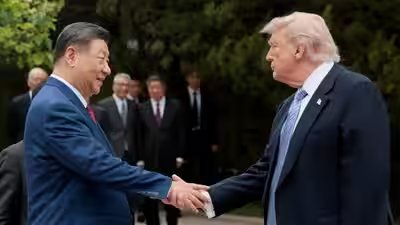
There is considerable skepticism over whether the US will target China. Washington is also trying to preserve a fragile trade truce with Beijing while avoiding a shock to the global economy.On Monday, Bessent pledged an “economic onslaught against Iran’s financial connections around the globe” as President Donald Trump seeks to bring his unpopular war in the Middle East to an end.Bessent announced dozens of new sanctions targeting entities, individuals and vessels. But the central message of his high-profile news conference was a warning that companies and countries continuing to conduct business with Iran could face so-called secondary sanctions.China is by far Iran’s largest oil buyer and provides Tehran with a vital connection to the global economy. As a result, any serious attempt to cut off the Iranian regime’s remaining sources of revenue would be difficult without also targeting Chinese companies.Trump has previously threatened to impose secondary sanctions on any country or company purchasing Iranian oil, but those measures were never implemented.The latest move shifts the focus away from threats of further military escalation and back towards economic pressure. Excluding China from such a campaign would probably limit its impact on Iran, while targeting Chinese companies could trigger retaliation and potentially add to the pressure on the global economy, according to a Bloomberg analysis.Part of the concern is that blacklisting Chinese companies could trigger another economic confrontation between Washington and Beijing.Taking such a step now could strain US-China relations just weeks before President Donald Trump and Chinese President Xi Jinping are expected to meet in September.When asked directly on Monday whether China could face new economic measures, Bessent said “no one is above the reach of US sanctions” but said he preferred “quiet diplomacy,” adding “we’re not going to name names.”
What experts are saying
“Bessent largely deflected questions about China,” said Craig Singleton, a senior fellow at the Washington-based Foundation for Defense of Democracies. “That makes tactical sense ahead of next month’s summit, but strategically it risks reinforcing Beijing’s view that Washington is reluctant to impose serious costs on major Chinese actors,” he told Bloomberg.China has for years rejected US unilateral sanctions against Iran as illegitimate. Although China’s state sector has largely observed the restrictions to reduce the economic fallout and retain access to the US financial system, Beijing has allowed private “teapot” refiners to find ways around the sanctions and continue importing and processing Iranian crude.In May, China instructed domestic companies not to comply with US sanctions imposed on five refiners. At the same time, its largest banks were caught between Beijing’s order and the potential consequences of being cut off from the US financial system.“Sanctions and pressure tactics do not help in resolving issues,” China’s Foreign Ministry spokesperson, Lin Jian, told reporters Monday. “They will only lead to escalation that serves no one’s interest.”If Washington were to impose significant measures on China, such as targeting a Chinese bank, Beijing would see the move “not only as destabilizing and as insulting, but also as a breach of” the trade truce previously reached by Trump and Xi, said Michael Sobolik, a senior fellow at Hudson Institute.Such action could prompt China to retaliate in ways that would cause substantial damage to the US, including imposing additional export restrictions on critical minerals essential to global manufacturing or curbing important pharmaceutical exports to the US, he told Bloomberg.
Global economic disruption
More broadly, Bessent’s latest sanctions campaign could add to the already significant economic disruption caused by the war against Iran. The conflict, launched by the US and Israel in late February, has already affected the global economy by disrupting energy supplies and shipping through the Strait of Hormuz, one of the most important trade chokepoints in the world.The resulting shock to oil and gas markets has increased transportation, fertilizer and other input costs, adding to global inflation while putting pressure on consumers and businesses worldwide. Rising freight and insurance expenses have also added to the strain on global supply chains.Bessent acknowledged the dangers of taking action too aggressively, indicating that the administration would initially allow countries and companies time to sever their economic links with Iran before imposing penalties that could have wider consequences for global markets.“We are giving everyone the opportunity to remedy bad behavior,” he said. “Why would I want to blow up the global financial system?”The Biden administration encountered a comparable problem after Russia invaded Ukraine in 2022. It brought together a coalition of more than 30 countries to freeze Russian assets, exclude banks from the global financial system and restrict Moscow’s access to technology.Those measures imposed costs on Russia but did not cripple its economy. Russia adapted by shifting trade towards countries including China and India. Meanwhile, the wider fallout from the war pushed up energy and food prices, with developing economies bearing particularly heavy costs.US efforts to reduce Russia’s energy revenues also had to balance the risk that sanctions could drive energy prices higher and, in turn, increase Russian revenues. Western nations eventually agreed on a price cap, but it still failed to bring the war to an end.According to Vali Nasr, a professor at the Johns Hopkins School of Advanced International Studies and a former adviser to the US State Department, secondary sanctions against countries doing business with Tehran could significantly widen the economic conflict. The impact would extend beyond China to India, Turkey and countries across the Gulf.“The US is essentially expanding its war in the Gulf to a much greater war between itself and other global actors around the world,” Nasr said.