





A church, a Jesus statue and a border wall: Inside Trump’s latest land acquisition battle | World News
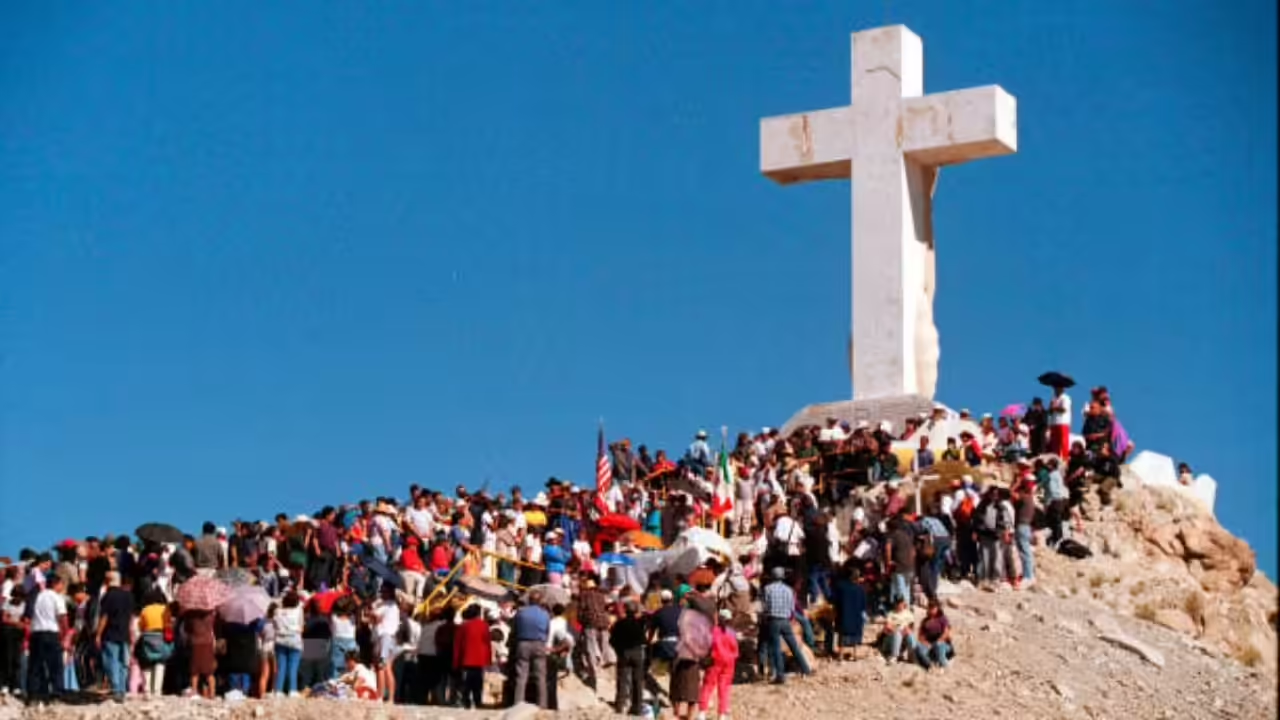
A move to protect history
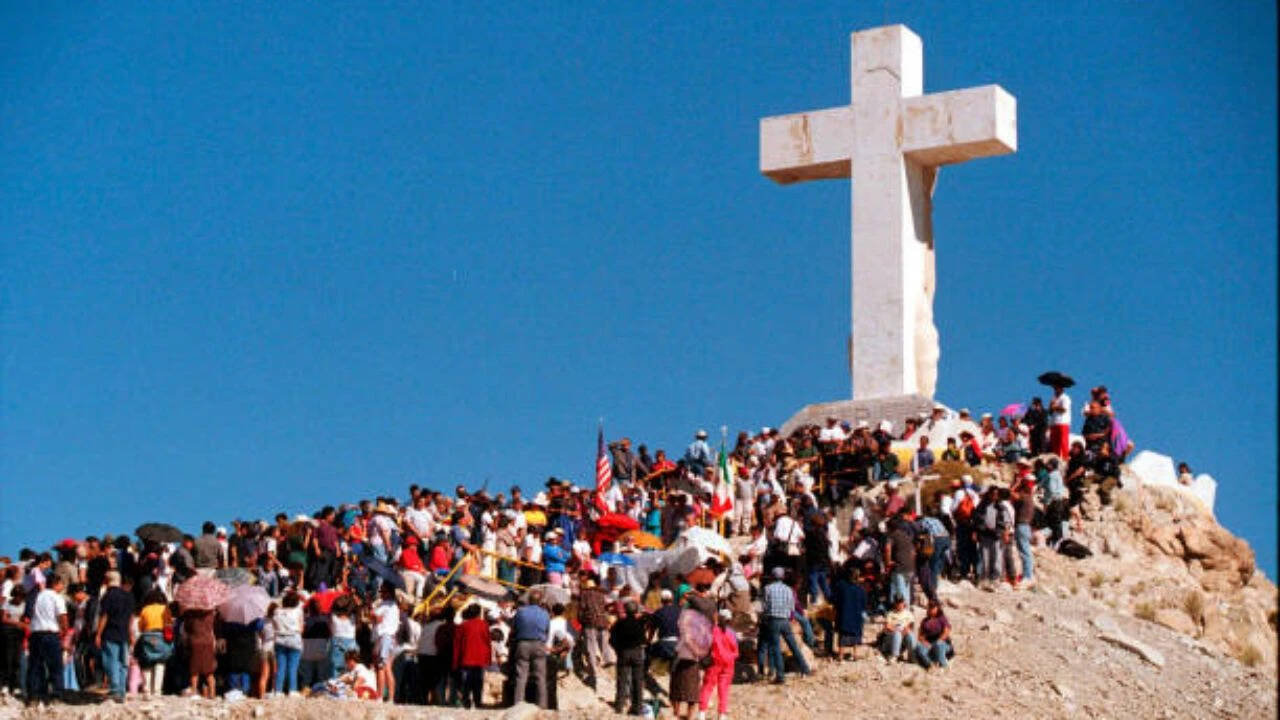
In the nearly 90 years since the sculpture was completed, thousands of pilgrims have reached the summit in faith.
Mount Cristo Rey, also known as Sierra de Cristo Rey, saw its first pilgrim in the early 1930s, after a local priest, Father Lourdes Costa, gazed out his window at the peak and envisioned a soaring crucifix at its summit. Father Costa made the challenging trek and shared his premonition with the Diocese of El Paso, which purchased the land from the state of New Mexico. In the nearly 90 years since the sculpture was completed, thousands of pilgrims have reached the summit in faith.The diocese then moved forward with the Constitution and the canon law. Its lawyers, the same Georgetown team that defended a South Texas chapel against the first Trump administration’s wall, argued that walling off a pilgrimage site substantially burdens the free exercise of religion under the First Amendment and the Religious Freedom Restoration Act, and that church property of this significance cannot be surrendered without the Holy See’s consent. On July 6, the diocese demanded a jury trial.The Justice Department’s reply came July 20, in a motion for judgment on the pleadings before Judge Kenneth J. Gonzales: “federal law recognises no other valid objection that a landowner may lodge to prevent the Government’s use of its eminent domain power.” A hearing set for July 23 in Las Cruces was postponed.Bishop Peter Baldacchino of Las Cruces has met the bulldozers with liturgy. He celebrated Mass at the summit on June 28 beside hundreds of pilgrims and El Paso’s Auxiliary Bishop Anthony Celino, weeks after warning that “the erection of a physical symbol of division and dehumanisation on the holy site of Mount Cristo Rey would shatter the sacredness of that cherished place.” The diocese’s legal brief is stark: “The wall is a physical manifestation of this government’s attitude toward migrants. Nothing could be less Catholic.” The church claims a towering steel barrier would desecrate a holy landmark and violate the religious liberties of those who wish to worship there.A week before, Rep. Veronica Escobar, the El Paso Democrat introduced the Mount Cristo Rey Protection Act, a bill to stop the federal government from taking Catholic Church land for the border wall. Not a single member of Congress joined her as a co-sponsor. El Paso’s Bishop Mark Seitz endorsed the bill as a demand that the federal government “set aside a heavy-handed abuse of power against this sacred place.”
A Trump ‘dream’
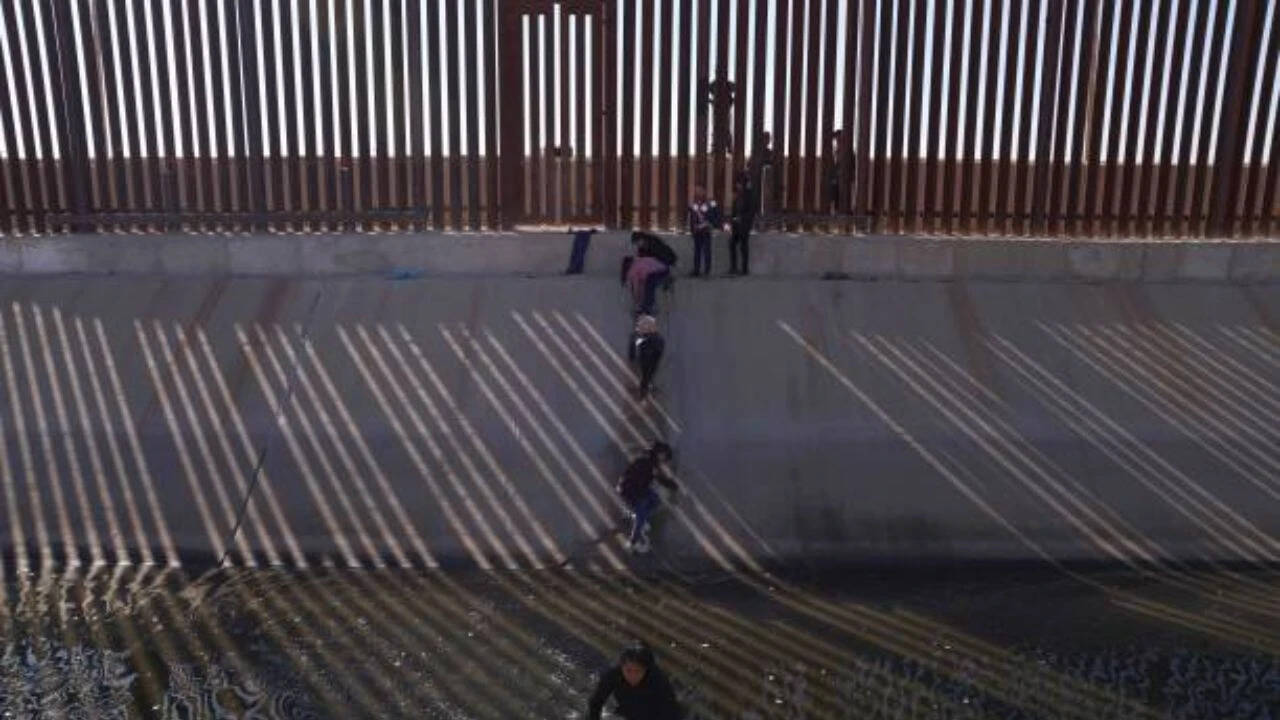
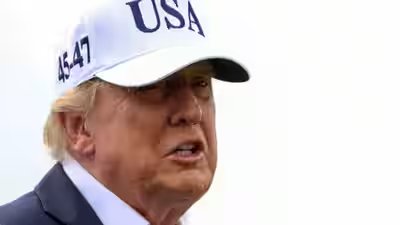
In order to tackle illegal immigration, Donald Trump has dreamt up an answer. A “beautiful” wall spanning all four states which abut Mexico in a 1,989-mile border.
In order to tackle illegal immigration, Donald Trump has dreamt up an answer. A “beautiful” wall spanning all four states which abut Mexico in a 1,989-mile border. Mexico, he said, would pay for its construction or else Mexicans in the US would be prevented from sending money back to their families. A Trump White House would “impound all remittance payments derived from illegal wages,” according to a BBC report. The threat is not small. Remittances from all Mexicans abroad were worth $24.8bn in 2015, as per the Bank of Mexico, more than the country’s oil revenues.Customs and Border Protection has acknowledged Mount Cristo Rey’s significance, but the agency has argued that the site is also popular for drug smugglers and human traffickers. The mountain is the only stretch of land in the area not fortified with tall fencing, Cristo Rey was long considered a natural barrier, and the federal government now sees the gap as a security problem. Part of the new segment will be built on federal land and the rest “will have no adverse impact” on Mount Cristo Rey, the government has said, because it won’t block the trail leading up to the Christ sculpture. Construction will occur several hundred feet below the statue.The diocese said it respects the Trump administration’s authority to secure the area. When Border Patrol officials asked in recent years to carve a roadway through Cristo Rey property, the diocese agreed and charged the government nothing. The church has not objected to the agency’s use of sensors and cameras around the mountain. But the wall is too far, said Deacon Winder, the chancellor of the diocese.On the other hand, the lawyers for the Justice Department have been pushing to accelerate the case, filing motions to condemn the property and take possession. “Time is of the essence,” they argued, because the government has already contracted with construction companies and could be fined if the project is delayed.There is a way to win, one that has been achieved before. In 2019, the government went after La Lomita Chapel in Mission, Texas, the 19th-century mission church that gave the city its name. Bishop Daniel Flores refused to consent, Georgetown’s lawyers fought the case, and Congress ultimately wrote protections for the chapel into an appropriations bill. Two weeks ago, Homeland Security agreed to route new wall construction behind the chapel rather than cut it off from its people.