






In 2026, Emerald Ash borers continue killing Ash Trees across North America; How one tiny beetle is transforming forests |
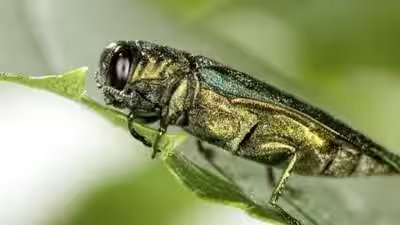
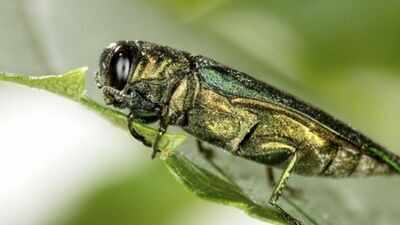
The emerald ash borer (EAB) is a jewel coloured, invasive beetle originating from Asia, which has posed a real problem for ash trees ever since it appeared on the scene back in 2002, near Detroit, Michigan. Since then it has been spreading throughout the United States and Canada, with reports saying that it has already killed hundreds of millions of ash trees.Even with the management and control attempts, the consequences of it still continue to be observed even after seventeen years since its first appearance. Even though efforts have been made by the forestry departments to help keep the EAB population under check, reports released this very month show that the problem is growing.According to a report by OPB, the Oregon Forestry Department announced that it found the invasive species in Beaverton, Salem, Silverton and the Rock Creek area. Local authorities have already prepared for the pest’s arrival.“We have already treated 22 city-owned natural area trees that are 20 inches or greater in diameter. We also have planted more than 2,000 native trees and shrubs,” said Jered Lane, an arborist based in Beaverton. “We also are monitoring all ash street trees on a regular basis.”Furthermore, it was recommended that ash and olive trees should no longer be planted and consequently taken off the planting list by the Oregon Forestry Department. In addition to this, Oregon’s forestry workers were encouraged to learn how to identify the beetle.“Any ash tree, including native Oregon ash, can be infested with EAB. Signs of infestation include sparse, yellowing leaves; splitting bark; D-shaped exit holes; and suckers or buds from the trunk or branches,” said Kat Bethea, an Oregon State forester.How does the EAB kill trees?It all begins with the eggs and larvae of the jewel coloured pest. They bore into the bark of ash trees, feeding on their cambium, which cuts off their nutrient and water supply. Due to this, the trees die. The process usually takes 2-4 years, after which the affected ash trees die.The first few signs that a tree is infested are: canopy thinning and yellowing of leaves, splitting of bark and increased number of woodpeckers around the area, though, when the woodpeckers were seen, most infestations were already well-established.The effects of ash tree depletionAsh trees are an integral part of many forests across the United States and Canada, where their rapid decline due to EAB presents a significant challenge for biodiversity. This has resulted in significant changes across ecosystems, as different species of plants, animals, and microorganisms which were previously reliant on ash trees disappear, making room for new ones.According to the reports, this is especially apparent in the wetland and riparian ecosystems as those trees are some of the dominant species there. In addition to this, the loss of ash trees has led to a change in the vegetation composition in the canopies of various forests across the United States and Canada.The damage caused by EAB has also negatively affected the urban tree populations, as those areas usually had more ash trees planted than in rural areas. Consequently, the authorities have had to spend a lot of time and money trying to kill, treat, or replace them. This has resulted in economic losses for the city budgets, with losses estimated in the billions of dollars, while the biodiversity was also negatively impacted due to the loss of those species.Control and managementThere are several control and management strategies which are used to help mitigate the consequences of EAB infestations on ash tree populations. According to the reports, those infestations could usually be treated individually with insecticides, though, because of their widespread nature, those treatments have proven difficult to implement.According to the reports, the introduction of certain wasp species which parasitized on EAB has helped reduce their populations, as well as the restrictions imposed on the transportation of ash wood.Also read:Sea snakes can have more potent venom than rattlesnakes; but there’s a surprising catchIn 2026, Burmese Pythons are not Florida’s only invasive predator, other animals putting native wildlife under growing pressureBy 2026, seventeen years after it was first detected, EAB is no longer an invasive species, but rather an established one in the United States and Canada. With scientists working on new ways to tackle the infestations, which will inevitably happen, there are still hopes that ash tree populations will soon recover, though, the reports show that, so far, little progress has been made in their efforts.